A surprise star at the recent Chelsea Flower Show in London: a kitchen oriented to the garden. Set in an energy-efficient Passive House conservatory, the design intrigued us thanks not only to its cabinet doors of patinated copper but also its exotic pedigree: It was created by UK kitchen titans Charlie Smallbone (formerly of Smallbone of Devizes) and Paul O’Leary (of deVol) working for the first time in collaboration. Come see.
Photography courtesy of deVol.
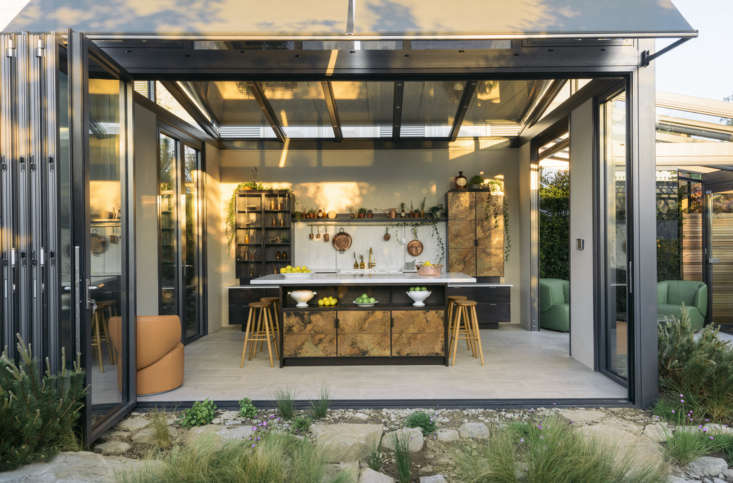
Above: Dubbed the Elemental Kitchen, thanks to its materials palette of wood, metal, and stone, the design was commissioned by the Caulfield Co., makers of state-of-the-art glass structures (read here about the company’s Passive House options).
Owner Mark Caulfield had turned to his former employer Charlie Smallbone to come up with a culinary space for his company’s Chelsea Flower Show exhibit. Smallbone himself had nearly a decade earlier left the kitchen company that bears his name—of late, he’s been running bespoke design firm Rock & Bone. Devol founder, Paul O’Leary, had recently reached out to Smallbone to trade business notes, and the two had been struck by their similar paths: “We both started out in antique furniture restoration and transferred that affection for traditional furniture details and proportion to kitchens,” says O’Leary. So in March, when Smallbone proposed a quick collaboration and sent sketches, O’Leary enlisted his crew to join the process. Many meetings ensued, all samples and parts were hand fabricated at deVol’s newly enlarged Cotes Mill showroom/workshop in Leicestershire—and construction was completed a mere six weeks later, on May 21.
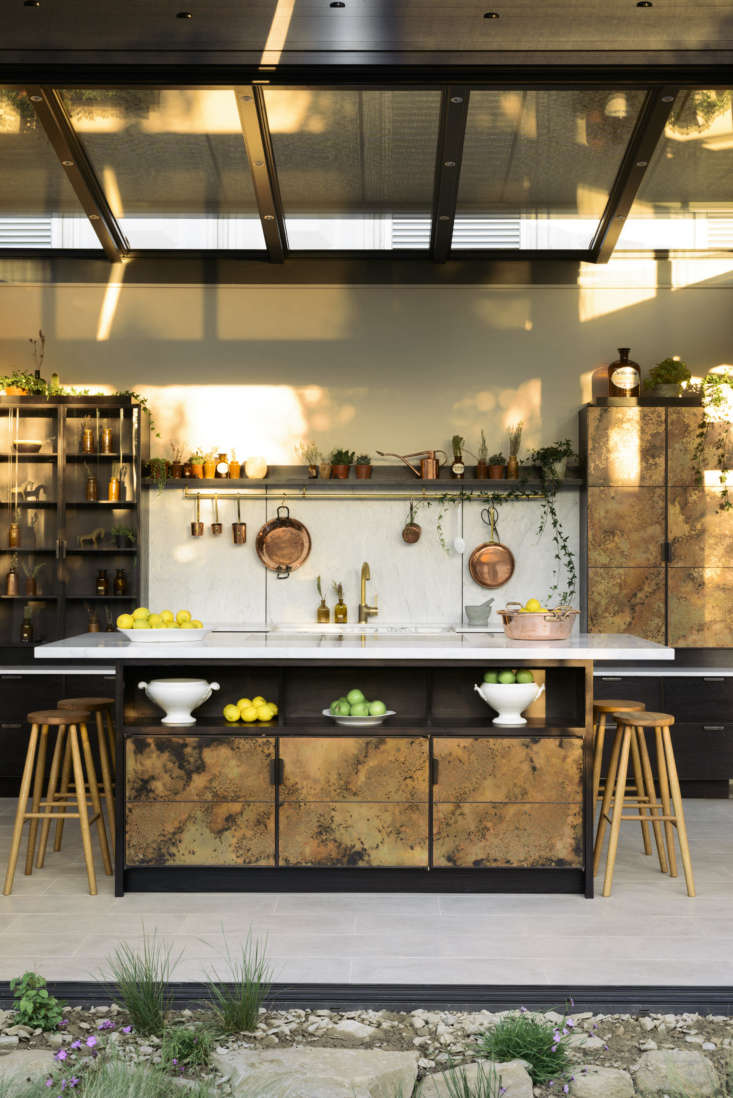
Above: The idea for introducing verdigrised copper as the key finish came about during Smallbone’s first behind-the-scenes tour at deVol: “Paul was already working on developing methods for antiquing metals. His niece, Stephanie O’Leary, who is a jewelry designer by trade, showed me what she’d been creating for him in the company’s new metal studio and I was blown away,” says Smallbone.,
Initially, the whole kitchen was to be antiqued copper; it was Smallbone’s wife, Sue Smallbone, who persuaded the team to go with “a more practical alternative finish for the main body.” They settled on black-stained ash, but O’Leary notes, “we’ve already started to experiment with other options, including limed oak, distressed painted oak, Carrara marble, and a crackled white enamel panel.”
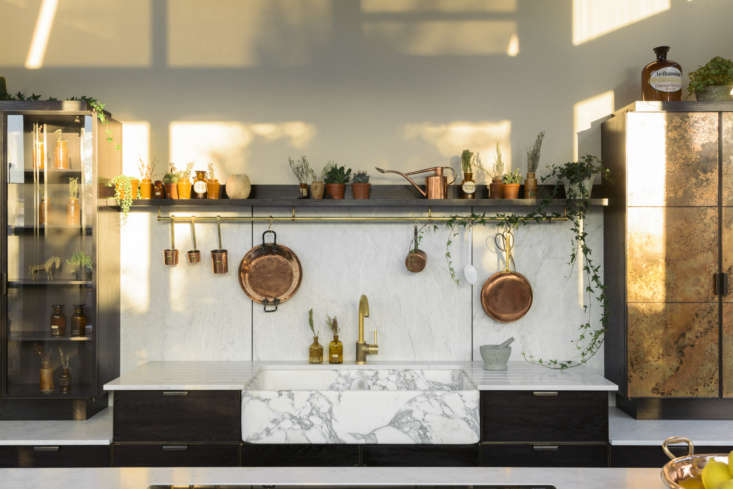
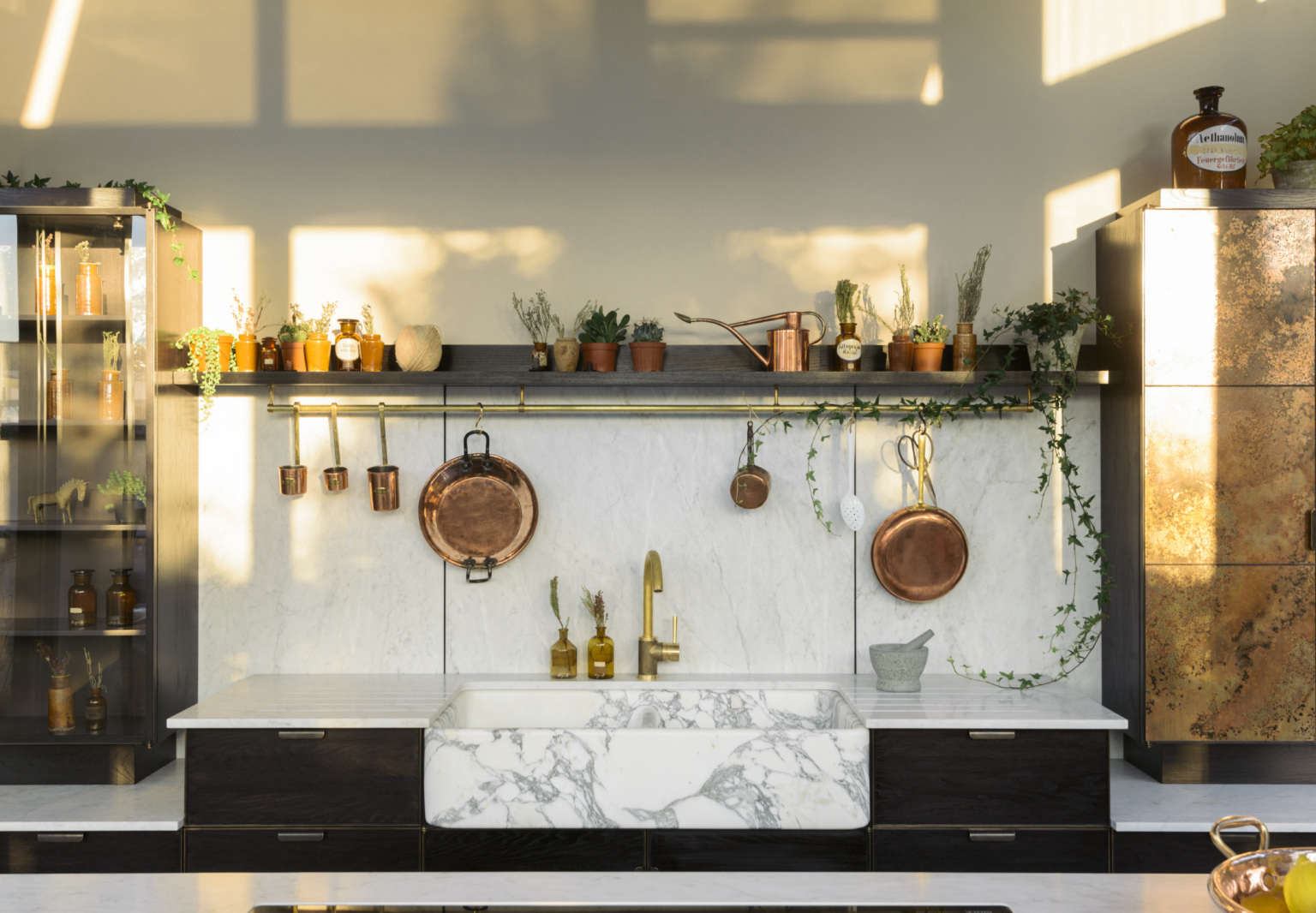
Above: The sink is Arabescato marble and the counters and backsplash are Carrara marble.
The brass faucet is the Evo180 Kitchen Mixer from Tapwell. Under the plant shelf, the aged brass hanging rail is one of the few elements available à la carte from deVol; they coming in different length starting at £100, and companion S hooks are available too (none are on the website yet; inquire directly).
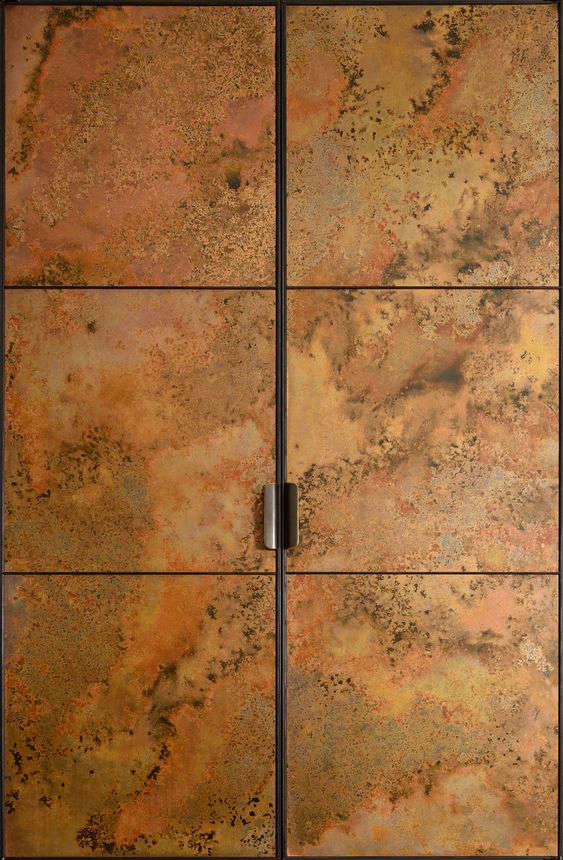
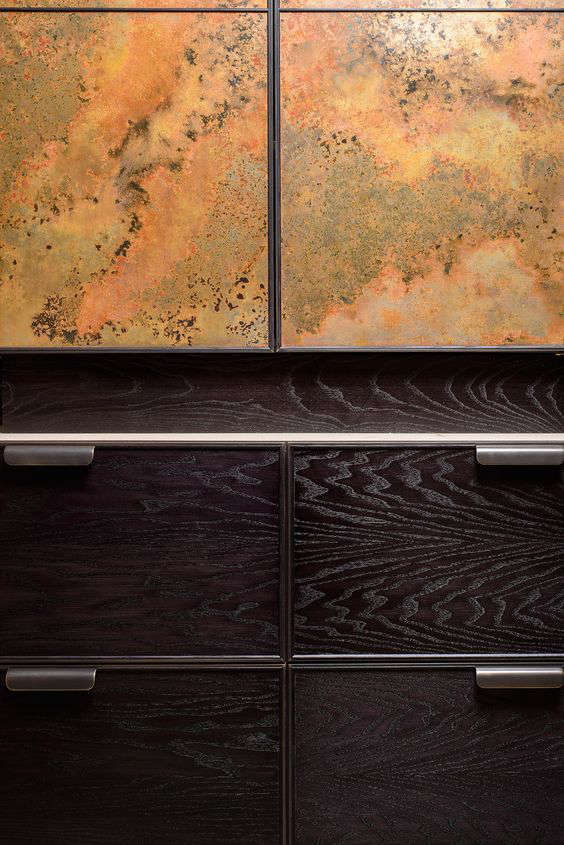 Above L: “Since opening our metal studio last year at Cotes Mill, we’ve been able to greatly expand our vocabulary of materials,” says O’Leary. The copper panels are individually treated with an antiquing fluid to create their patterning. They’re then oiled to preserve the finish—slowly, over time, the copper will evolve or require re-oiling. Above R: The cabinets are paired with ash drawers that are detailed by thin, dark brass cockbeading, a decorative and protective molding updated from traditional woodworking. “This framework allows us to introduce an infinite variety and number of facia panels for our kitchen fronts,” says O’Leary.,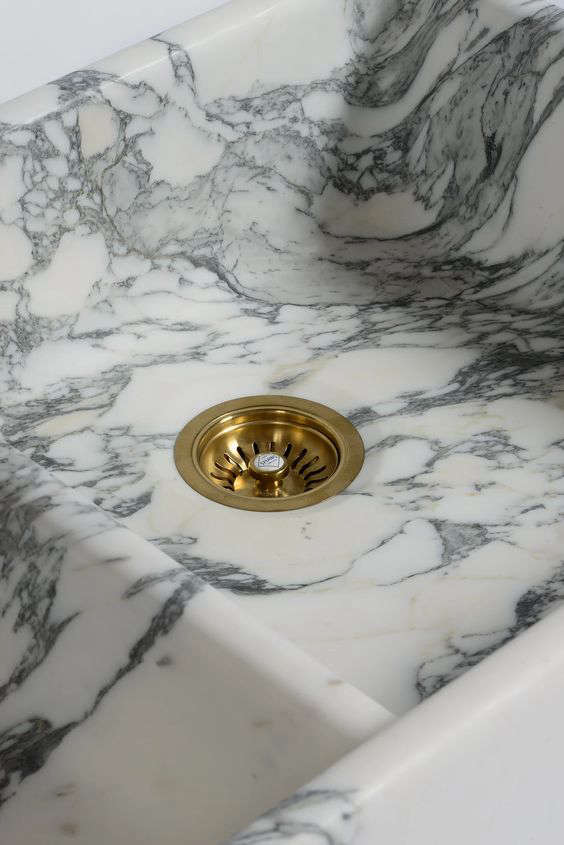
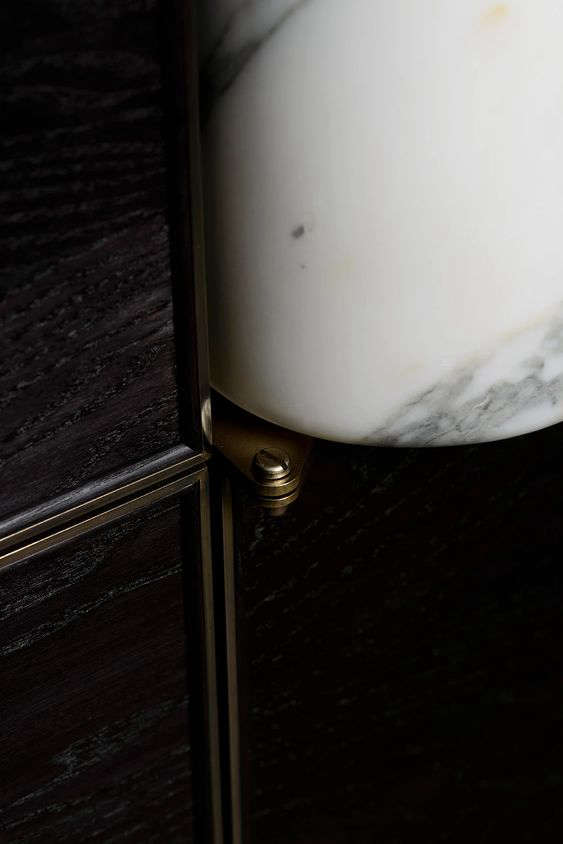 Above L: The Tuscan Farmhouse Sink, the newest offering in deVol’s lineup of marble farmhouse sinks, was sculpted from a single block of Arabescato marble. Above R: The cabinets have cast-brass pivot hinges that were inspired by Crittal windows.
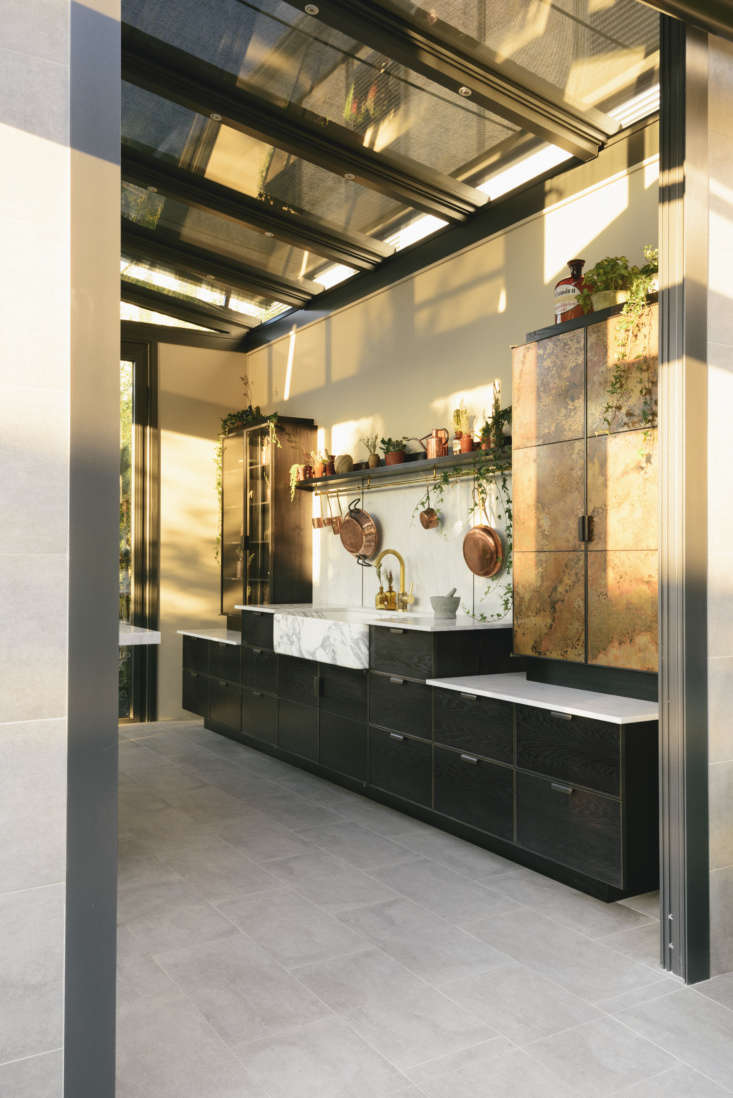
Above: Ash cabinets at each end of the sink offer open (glass-faced) and closed storage. There is no dishwasher here, but one can be easily incorporated. The stone look-alike floor is Stucco Gray Porcelain matte tile from deVol’s sister company Floors of Stone.
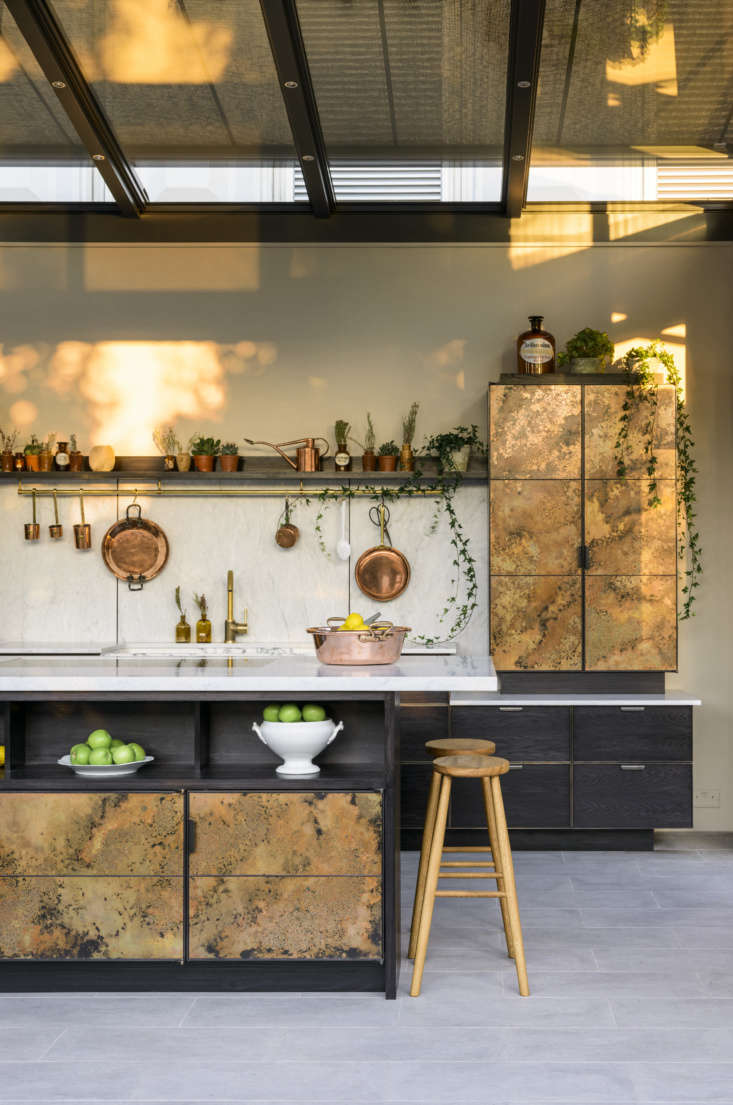
Above: The refrigerator and freezer are tucked under the sink side of the island, which also has a Wolf induction cooktop. The simple wood stools are deVol’s Helen’s Stool The kitchen is available as a bespoke design from deVol, priced from £50,000 to £80,000. See more details at Charlie Smallbone’s new website—and stay tuned for more Smallbone-deVol collaborations.
The Elemental Kitchen is a new direction for deVol. Take a look at the company’s mainstay designs:
- The Refined, Rustic Kitchen, Sebastian Cox Edition
- A Statement Backsplash in a Grand Green London Kitchen
- A Fairy-Tale Kitchen in Somerset for Rocker Pearl Lowe