When photographer Aya Brackett and her husband, Corey John Creasey, a freelance film director, wanted to upgrade the kitchen of their Oakland, California, home, they had to marry their modern sensibilities and utilitarian needs with the character of their “funky, hand-built” house. “It’s a hodgepodge,” she says, built partly in 1895 and partly in the early 1980s. “It’s very California, and very hippie.”
In addition, the kitchen had some major flaws: It was large but lacked counter space (“we were always fighting over one little spot by the stove,” she says), and the walls were filled with rot and highways for ants. The previous owner had installed built-in storage hutches with deep, narrow shelves, making it difficult to locate essentials.
With help from their contractor and cabinetmaker, the couple designed the new kitchen themselves. They retained the floor plan and added a new central island. They replaced the existing mismatched marble countertops with new white Calacatta, and swapped the impractical handmade storage hutches for built-in cabinets with accessible pullout shelves. They managed it all within budget and in under six weeks’ time, something Brackett credits to her trusted contractor and cabinetmakers (Sallie Lang of Bliss Design and Ben Winslow and Michael Mellon of MWDB Design). “We knew it would be expensive,” Brackett says, “but we had an agreed-upon budget with the cabinetmakers and let the contractor charge us what she needed to charge us.” She trusted them to bill her fairly and work efficiently, and they did. Let’s take a look at the finished product.
Photography by Aya Brackett.
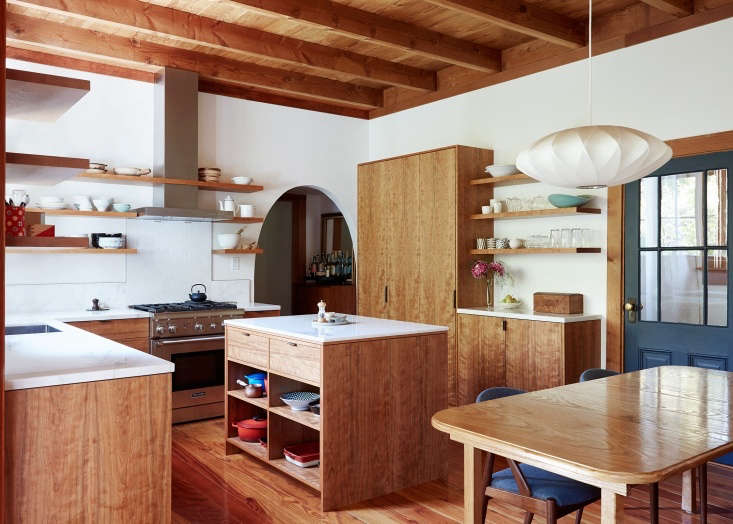
Above: For the countertops, Aya chose white Calacatta marble with minimal veining. “It was very expensive, but we used every square inch of the slab we sourced,” she says. Thinking of marble countertops? See Remodeling 101: The Difference Between Carrara, Calacatta, and Statuary Marble.
Unfortunately Brackett experienced a snafu with her new marble countertops shortly after they were installed. The day before a photo shoot, an assistant used vinegar to clean the kitchen island. The marble “was etched terribly; it was covered in indelible water spots,” Aya says. An estimate for professional repair came in at $1,500, but a marble polishing powder Brackett found online did the trick. “We rubbed it on for a long time and it fixed it completely; it was amazing,” she said. She subsequently had the counter sealed to avoid further disasters.
Above: Aya was initially thinking of light Scandinavian wood for the kitchen, but decided the tone wasn’t in keeping with the character of the house. She wanted to avoid an orange hue, so she chose cherry, a wood that “feels right in the house.”
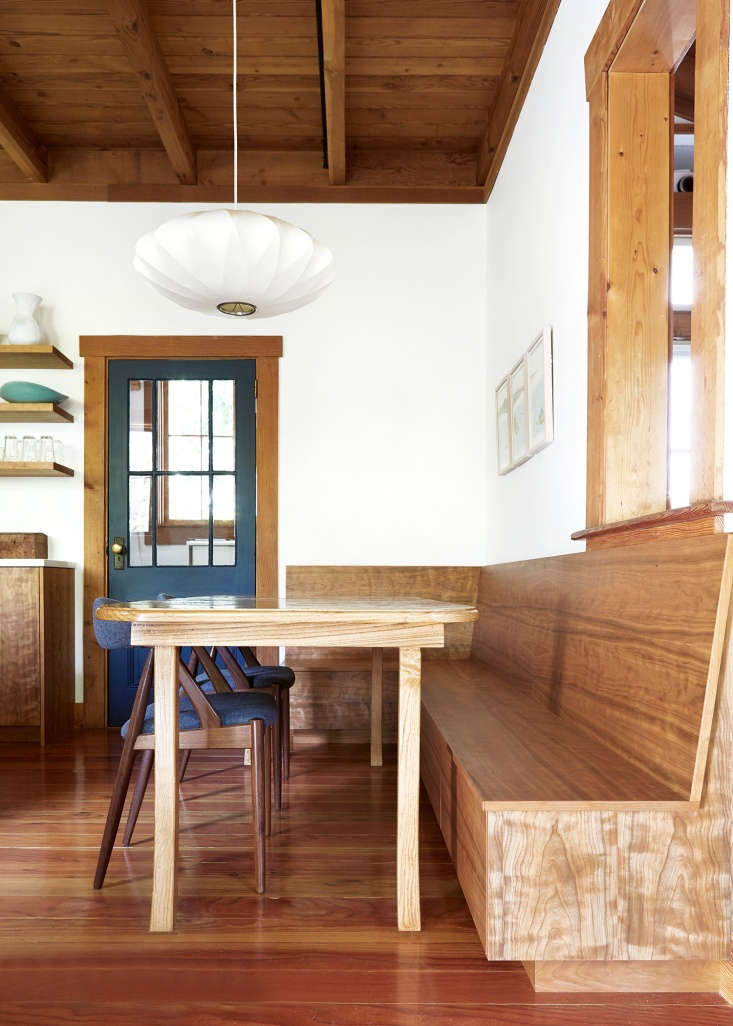
Above: The vintage George Nelson light over the dining table came with the house.
About the marble, Aya says, “everyone warned us. It’s beautiful, but it’s so delicate.” She’s unsure whether she would choose it again, but the couple still loves it. “We’re just not quite at the point where we’re ready to let it get patinated yet.”
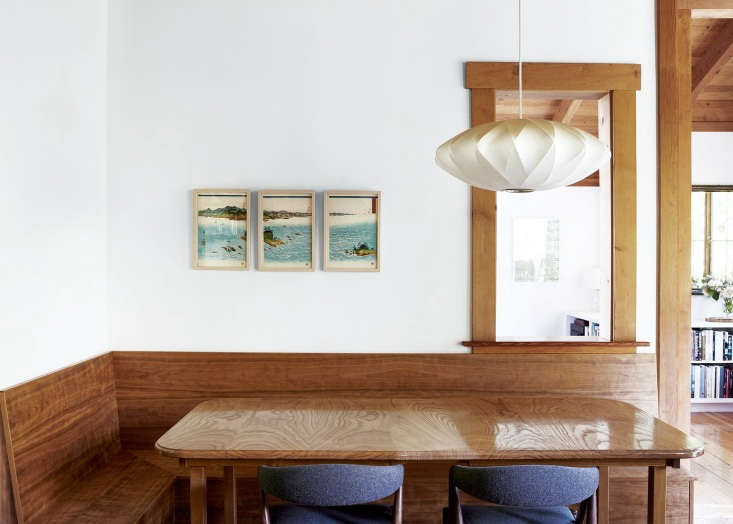
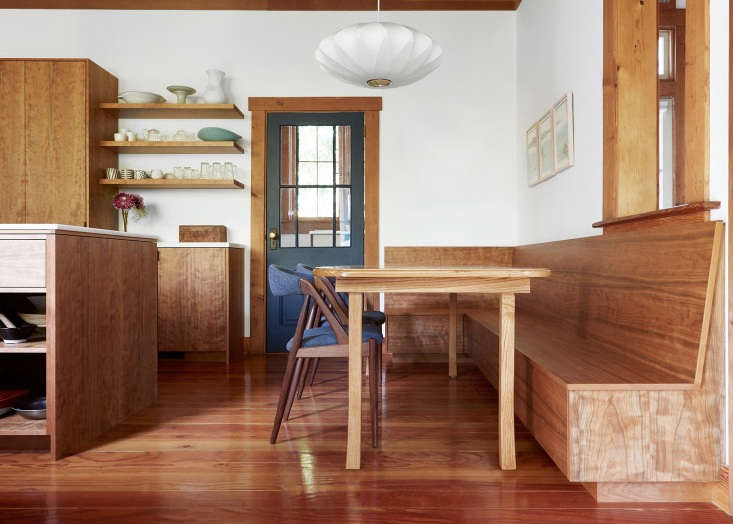
Above: Aya’s father, Len Brackett, who owns a Japanese timber frame company called East Wind Inc. and studied in Kyoto as a temple carpenter, made the table of rare American chestnut from a fallen tree. It expands to seat 12: “We wanted a really big table so people can come over and eat dinner with us comfortably,” she says.,
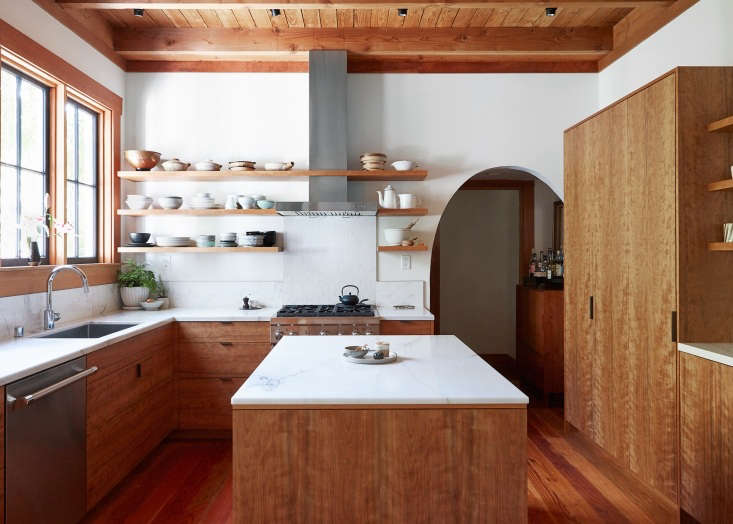
Above: Economy measures: For the range backsplash, Brackett used leftover Heath tile and a $300 Z Line range hood from Amazon (over a $1,500 Miele model she’d been admiring). Aya is a booster for open shelving. “It’s a nice opportunity to look at the pottery that we like, and I don’t think they get dusty. We use them constantly, so they’re in rotation in our dishwasher.”
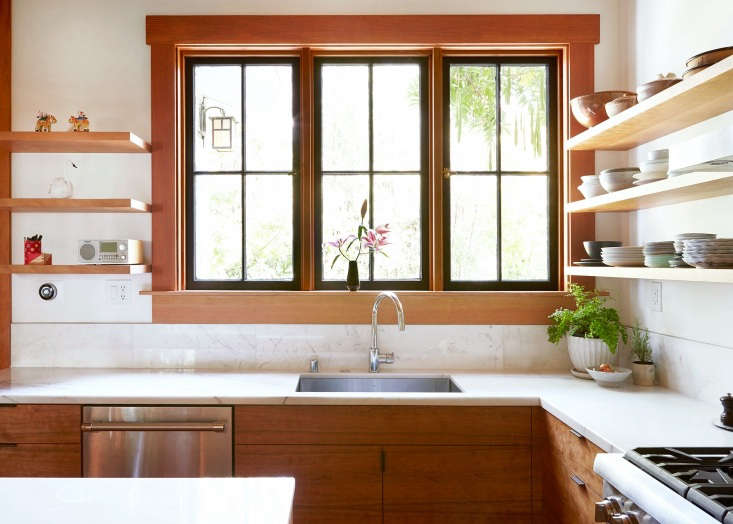
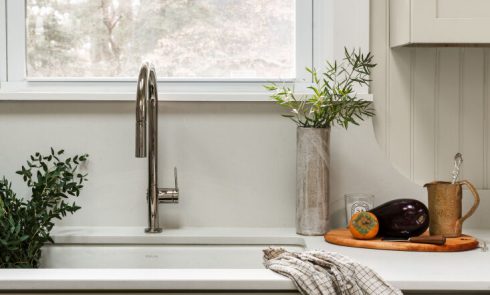
Above: The counter backsplash is marble tile and the faucet is Concetto from Grohe. Aya admired a $2,000 sink before settling on this $300 utilitarian undermount by Kraus from Amazon. “It’s been awesome,” she said. “We didn’t need to spend that much.” The water damage to the original back wall meant that they needed to reframe it. “That was probably the most expensive and time-consuming part of the whole project,” Aya says. They debated replacing the windows with a single, large window, but decided against it and painted the existing mullions in Benjamin Moore’s Hale Navy. “There’s a certain look to our house that we wouldn’t have chosen, but it’s kind of weird to try to modernize just small parts of the house.”
,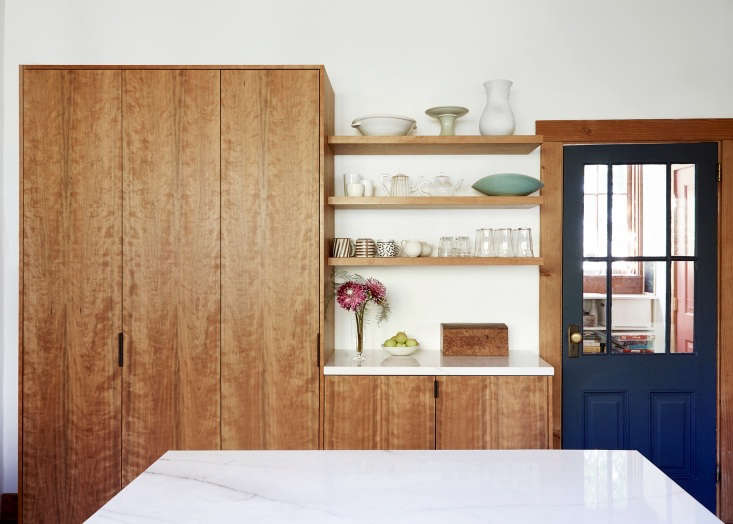
Above: A blue door, also painted in Hale Navy, leads to a small room housing the refrigerator and the laundry. The separation doesn’t bother Aya: “The fewer appliances we have to look at, the better.”
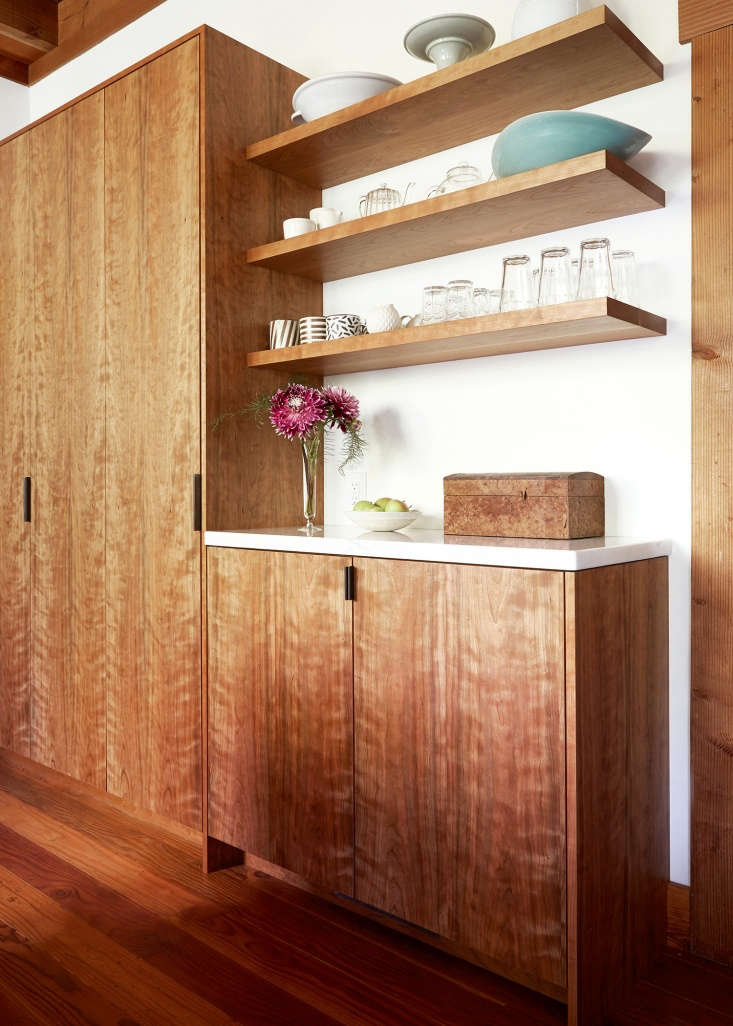
Above: Aya loves the antique-finish cabinet pulls from Mockett: “The tabs work so well,” she says. “You never need to touch the wood, so it stays clean.”
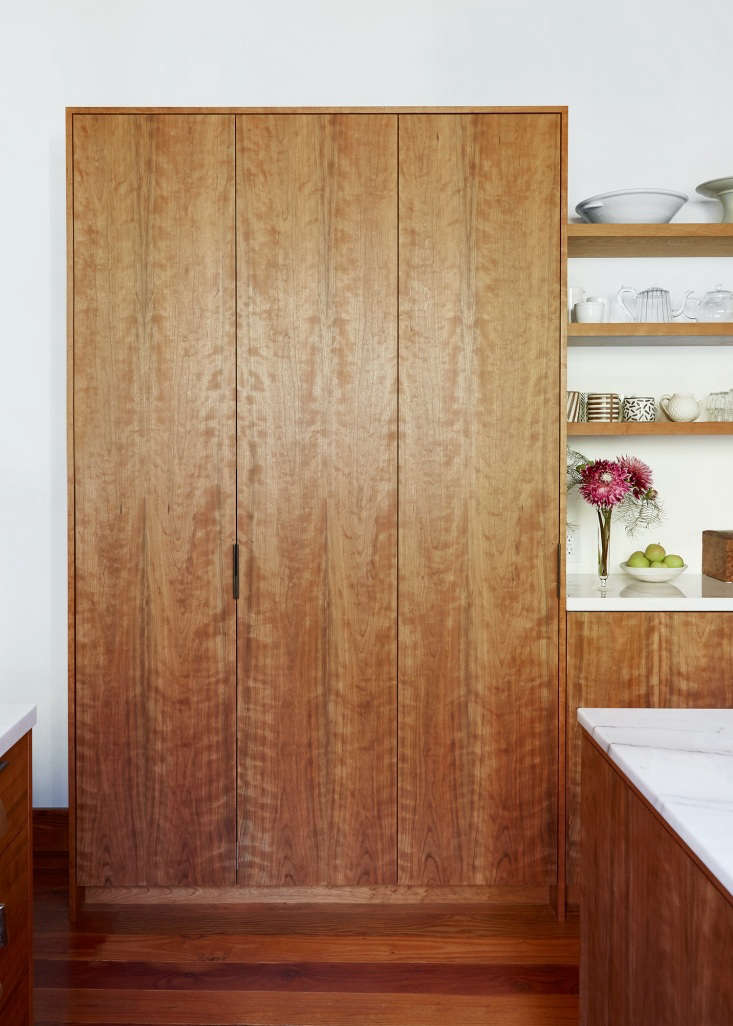
Above: The cabinet fronts are veneer, sliced from a single cherry tree for consistency.
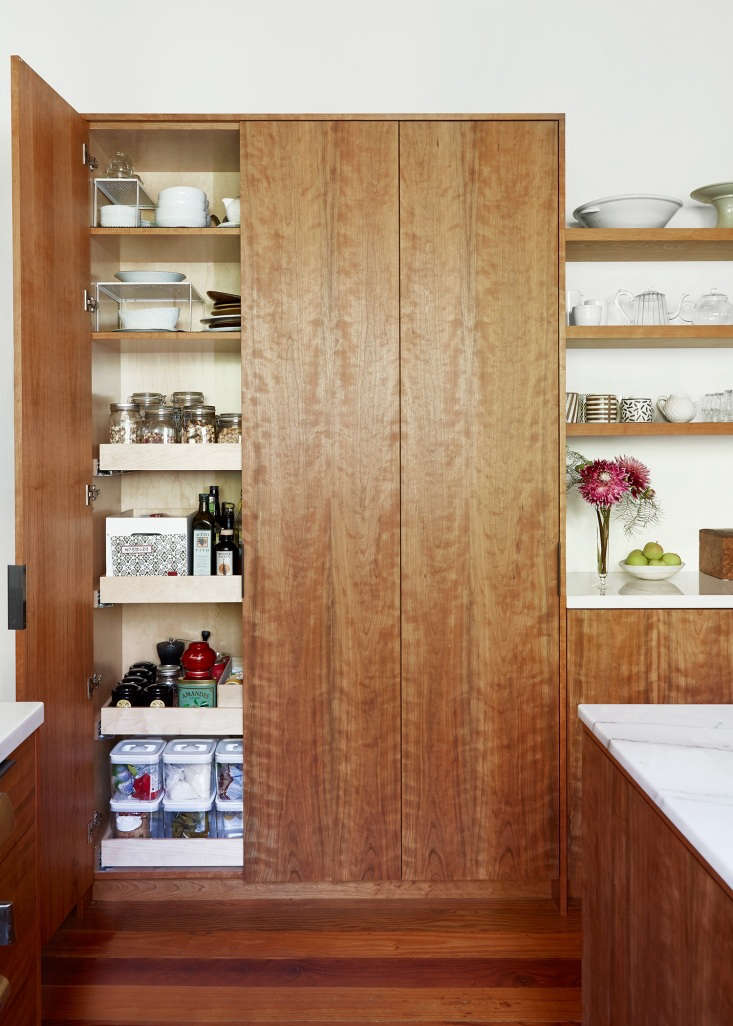
Above: The new pantry has wide, shallow, pullout shelves that hold provisions and dishware.
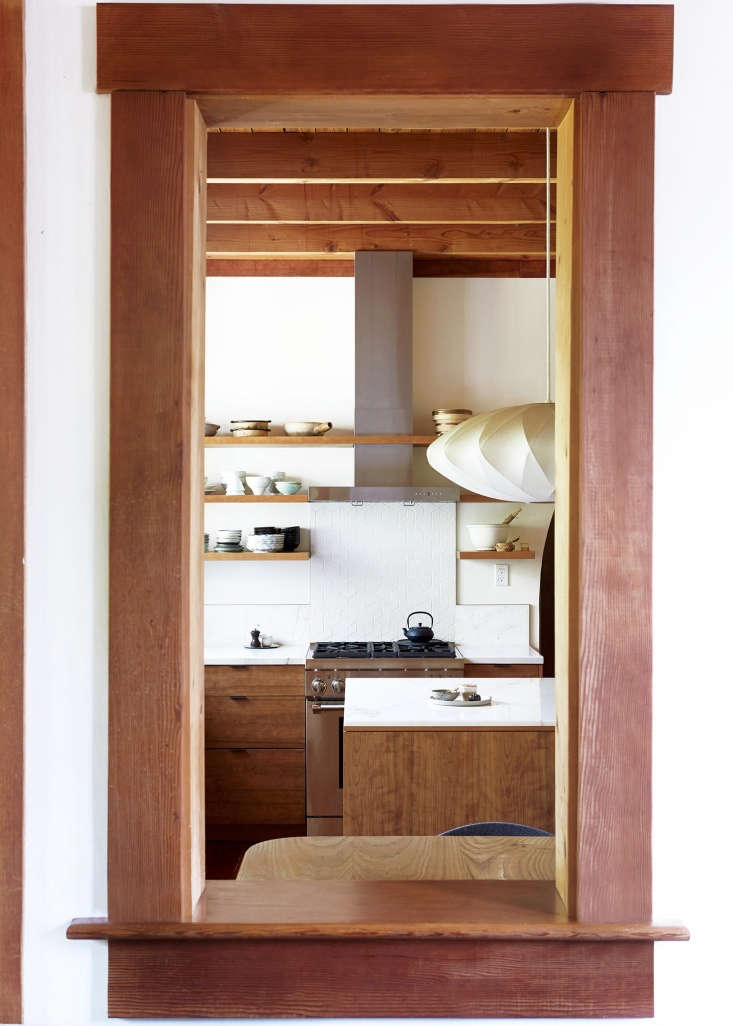
Above: A pass-through window connects the kitchen to the living room. “It’s a strangely cozy element,” Aya says.
Before
Above: The previous owner had installed large armoire-style cabinets that were “pretty and country-home, but not quite our style,” she says.
See more of Aya Brackett’s work in:
- The Mysteries of Berkeley: A Literary Couple at Home
- The Sorcerer’s Apprentice: A Ceramicist Discovers His Calling
- Bathroom of the Week: An Artist-Made Mosaic Tile Floor, Start to Finish
N.B.: This post is an update; the original story ran on October 19, 2017.