A look inside a maker’s studio almost always reveals far more than the artist’s craft; often, the space surrounding a workbench has been creatively adapted. Jochen Holz’s studio in Stratford, East London, is a case in point. Here, the German-born glassmaker—whose wonky, textured pieces and sculptural neon installations can be found at The New Craftsmen and Momosan Shop (you might also recognize them from our Trend Alert on two-tone glassware)—installed Ikea base cabinets and adapted them beyond recognition to create a kitchen unlike any we’ve seen. Join us for an exclusive look inside.
Photography by Kim Lightbody.
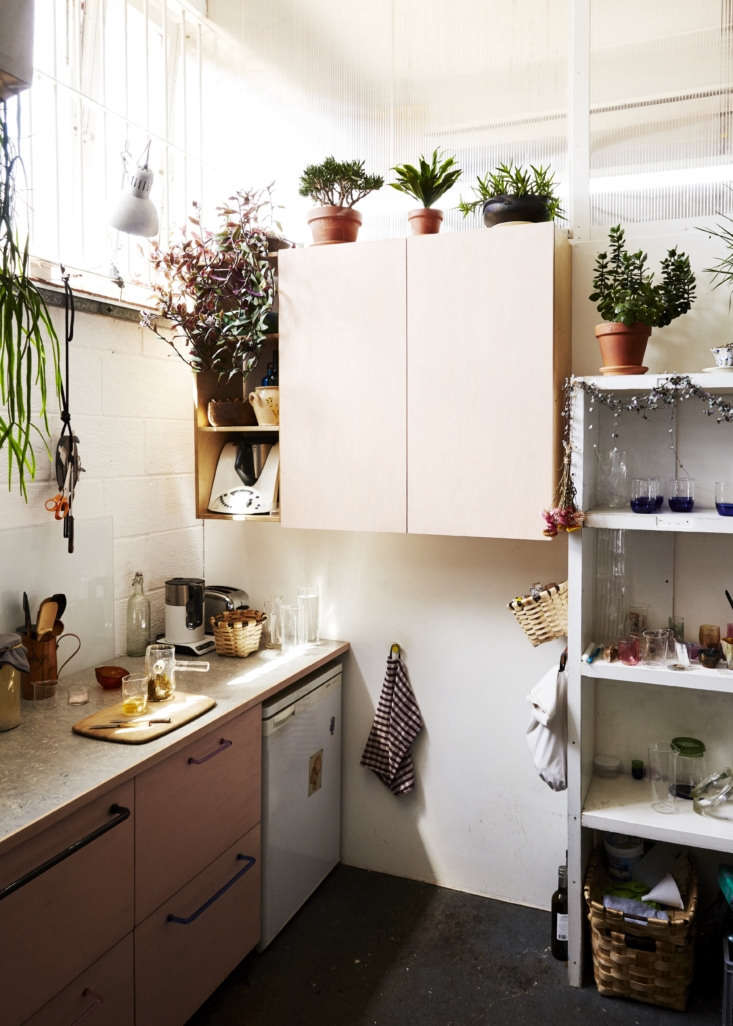
Above: Holz’s kitchen occupies a corner of his studio in East London.
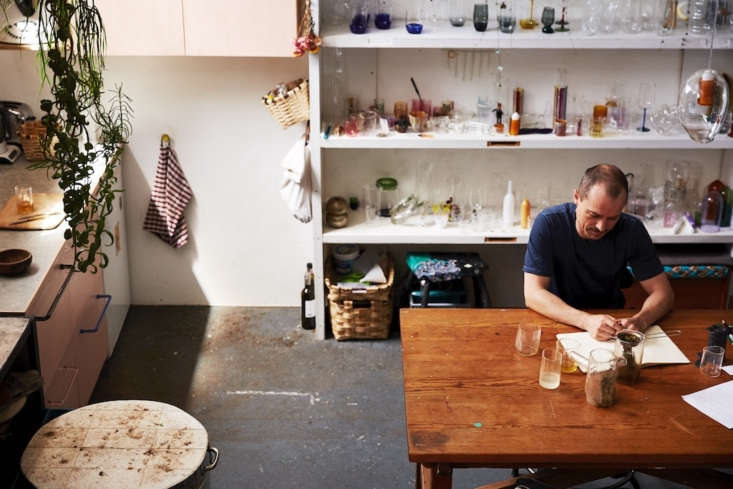
Above: The glassmaker in his kitchen. His workbench can be seen to the left of the kitchen.
Holz specializes in lamp working, which is a technique that transforms prefabricated borosilicate glass tubes into one-off pieces by melting the glass over a torch. The glass tubes are hardwearing and heat-resistant, which makes his unique pieces suitable for everyday use.
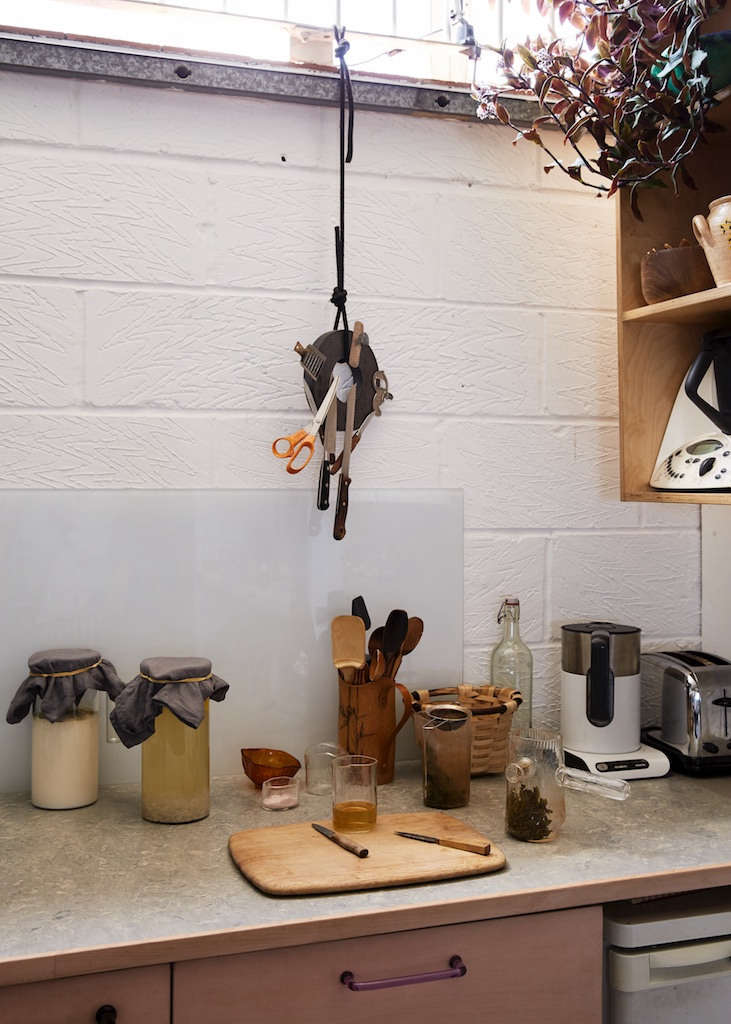
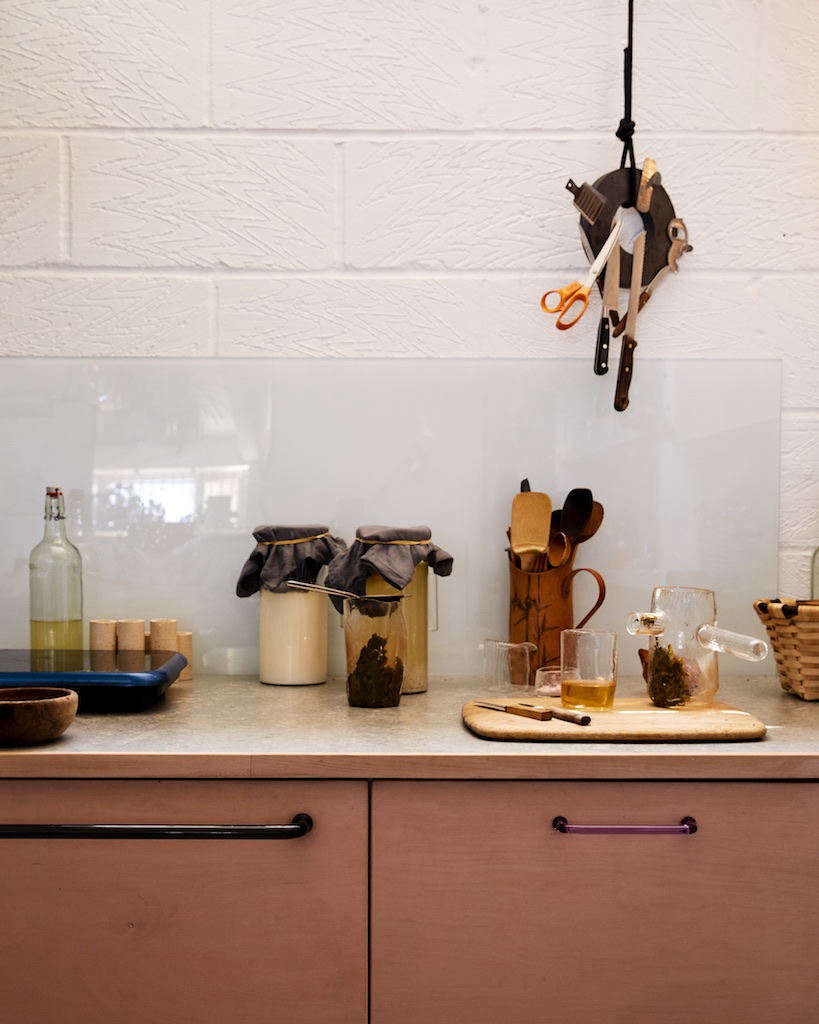
Above: The backsplash is a sheet of painted glass, salvaged from an old project and glued in place. A round industrial magnet serves as a utensil holder.
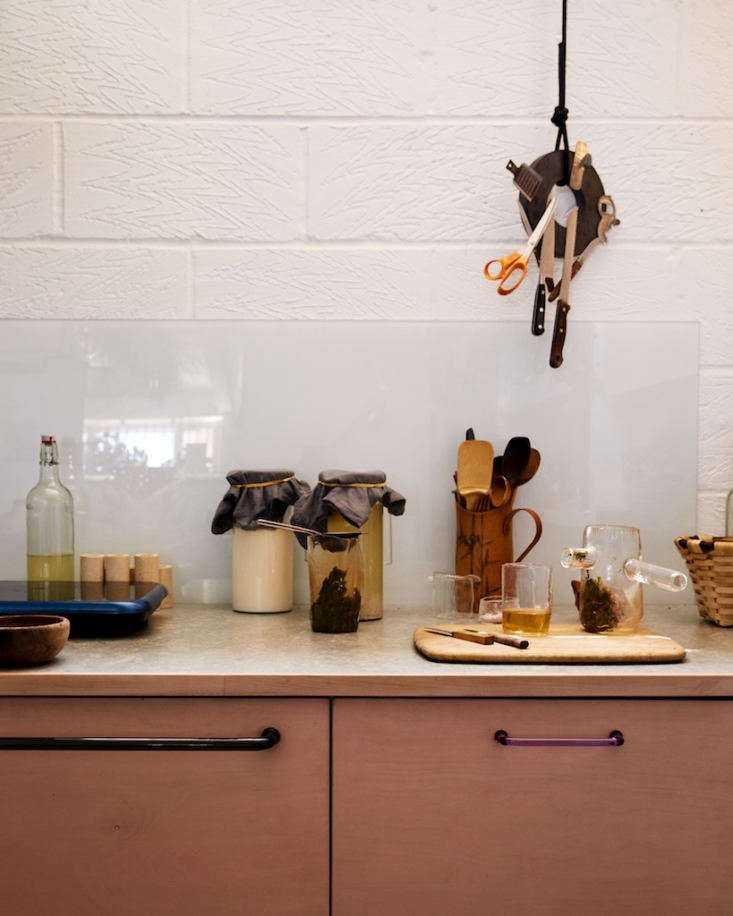
Above: Holz affixed birch plywood fronts to Ikea cabinets, giving each front a coat of Osmo hardwax oil. (Holz mixed the oil with a touch of pink before applying.) Glass handles were made from colored glass rods in gray, teal blue, and pink. They are set into the plywood and glued with epoxy resin.,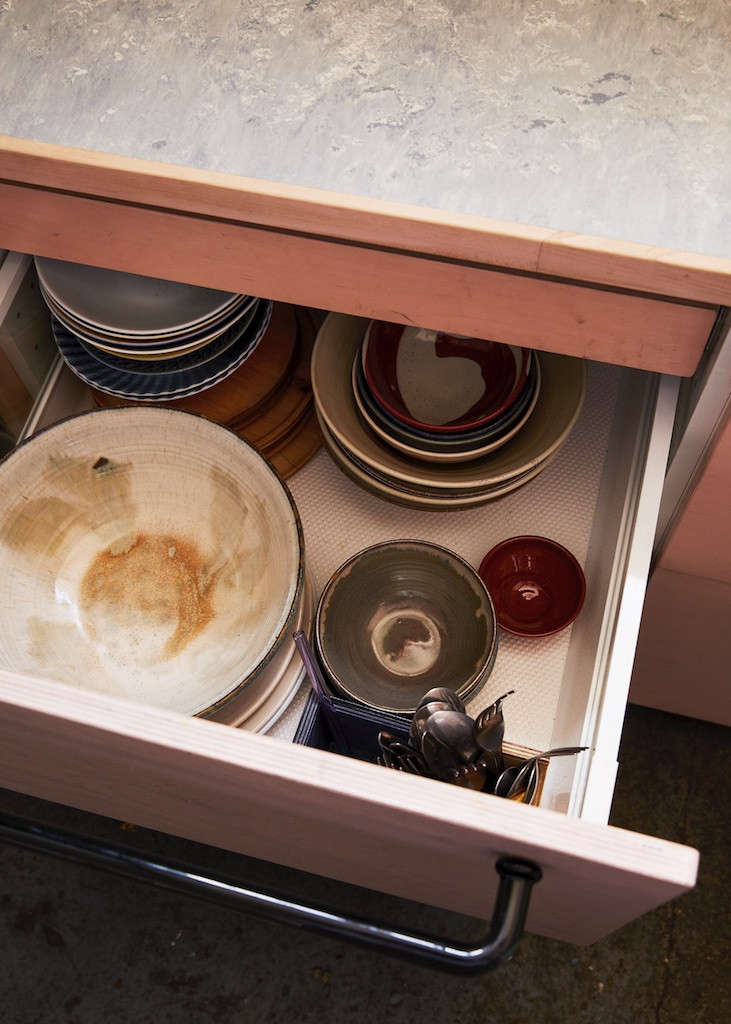
Above: Holz’s collection of ceramics is mostly sourced
from Artesania de Galicia in northern Spain.
The work surface was made from leftover pieces of Marmoleum, glued onto a birch plywood board edged with a solid maple timber strip. (For more on Marmoleum, see Remodeling 101: Affordable and Environmentally Friendly Linoleum.)
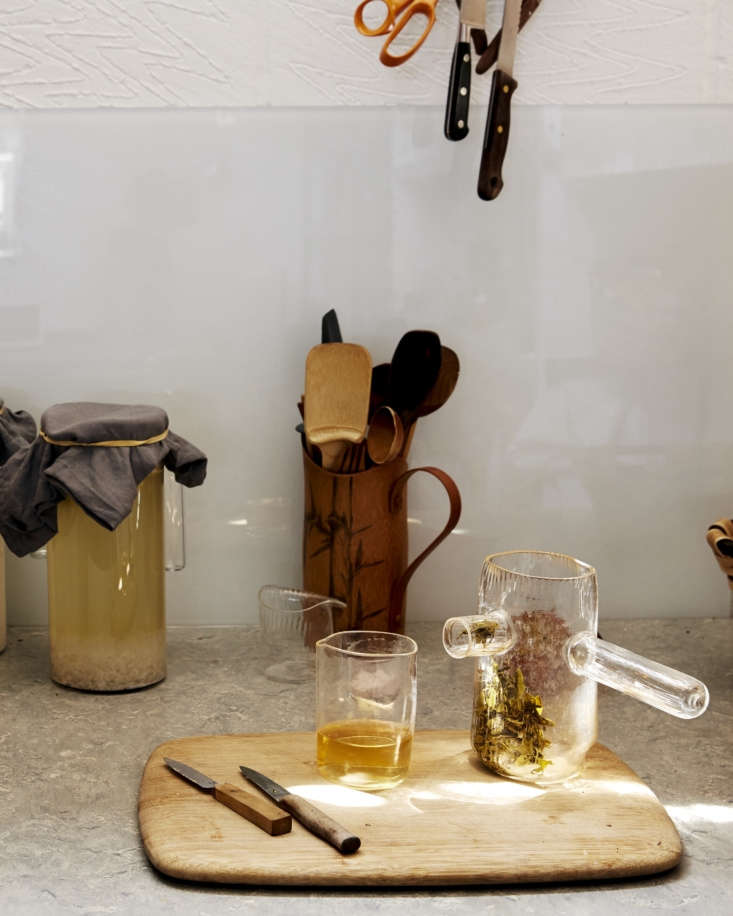
Above: Holz’s collection of drinks includes milk kefir, water kefir, and
green oolong from Taiwan, seen here brewing in one of his own textured glass pots.
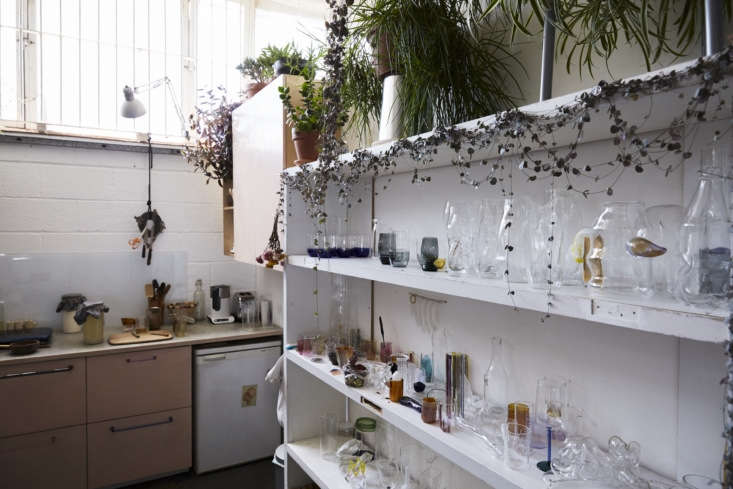
Above: Holz’s artfully utilitarian pieces line the shelves.
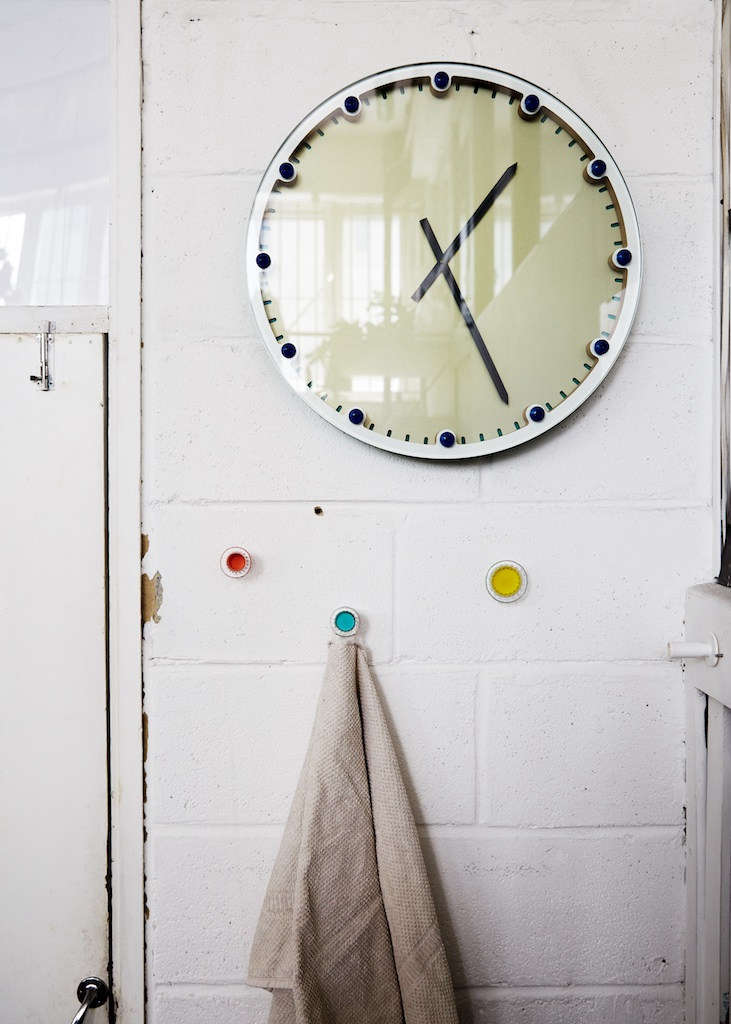
Above: Bespoke hooks are screwed into the whitewashed, breeze-block walls beneath a prototype clock by Fabien Cappello.
Holz shares the studio with his partner, Attua Aparicio of Silo Studio. The couple made these hooks together, setting colored Jesmonite acrylic into glass.
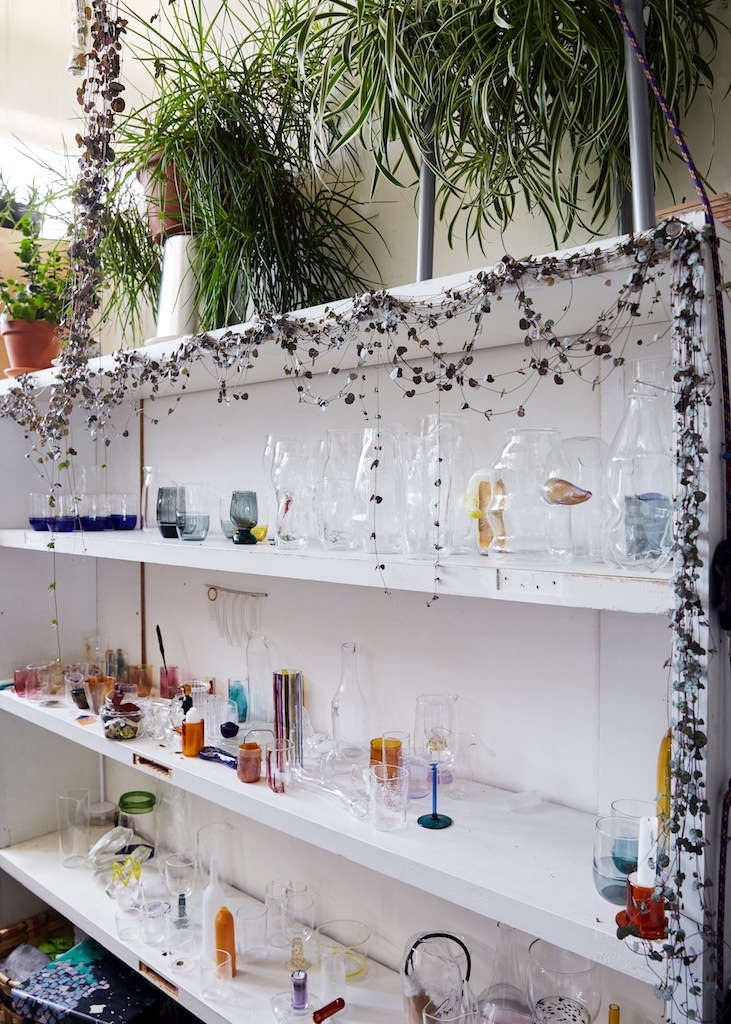
Above: A trailing vine fringes Holz’s open shelving system.
Prototypes and finished pieces are displayed in the studio beneath a thriving collection of indoor plants. The items made of clear glass have been given texture and shape through pressing the molten glass against various surfaces, such as burnt wood or perforated metal. “I wanted to get away from the idea that glass is this pristine material, to give it a bit more history and edge,” explains Holz.
Above: A cluster of Trump figurines.
The colored glass collection is made using an Italian technique known as incalmo. Much like a ceramist, he builds each piece by heating and fusing together colored pieces of glass. The end product is intentionally playful. “I don’t normally do figurative work,” explains Holz, “but I had fun making these Trumps. I found the quiff worked really well.”
For more studio inspiration, see 1,000 Square Feet on a Budget: An Artist’s Loft in North London. And for more maker’s kitchens, see:
- Kitchen of the Week: A Backyard Kitchen in Berkeley, Ceramics Included
- Kitchen of the Week: A DIY Ikea Country Kitchen for Two Berlin Creatives
- Kitchen of the Week: A Hip, Low-Key Kitchen in Topanga Canyon
N.B.: This post is an update; the original story ran on September 27, 2018.