Martino di Napoli Rampolla opened Numeroventi, a guesthouse and residency in the center of Florence, after living among the creative class in Barcelona and noticing the “lack of a contemporary connected community in Florence” by comparison. Back in Barcelona, Rampolla met designer Andrew Trotter through his project called Openhouse (then a gallery and store, now a print magazine) and called on him to design the interiors of Numeroventi. Architect Gianni Emillani renovated the 16th-century building, which is located inside the Palazzo Galli Tassi, a history with ties to Michelangelo and a ownership by affluent Florentine families and an eccentric entrepreneur. Trotter designed the interiors with midcentury vintage sourced from all over Europe with select modern designs. Here’s a look inside.
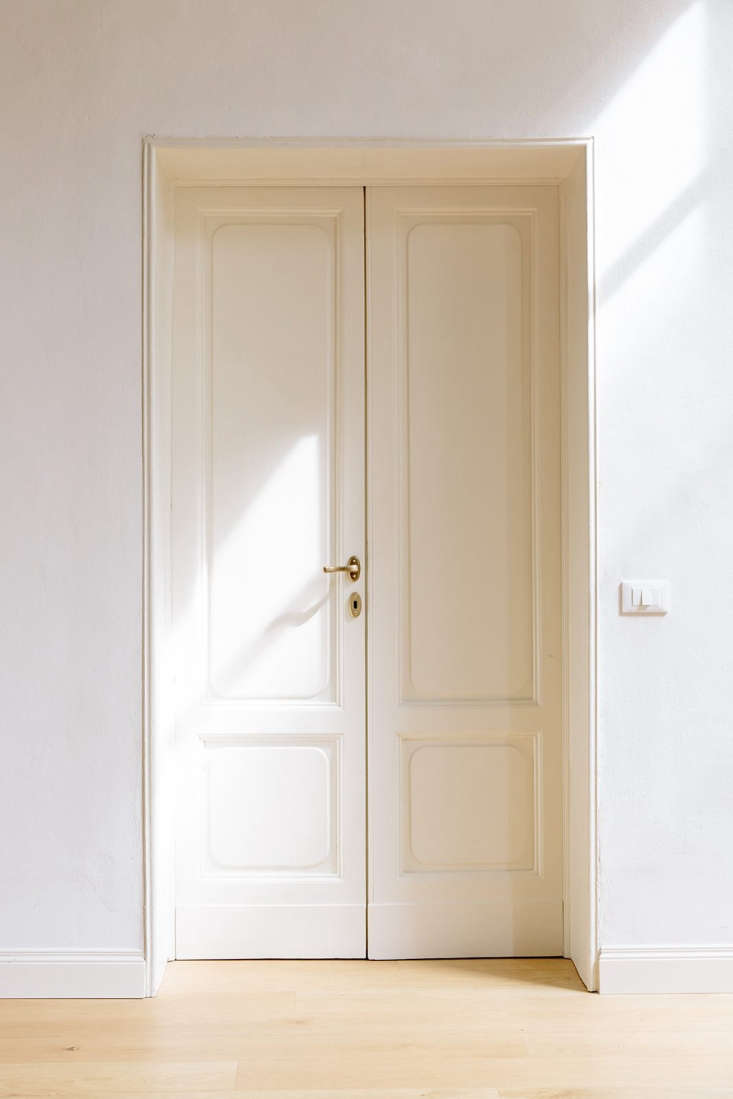
Above: The floors are newly installed oak. Rampolla had to fight for bright white walls (the standard in Florence has a yellow base), which he believes adds at least 40 percent more light into the building.
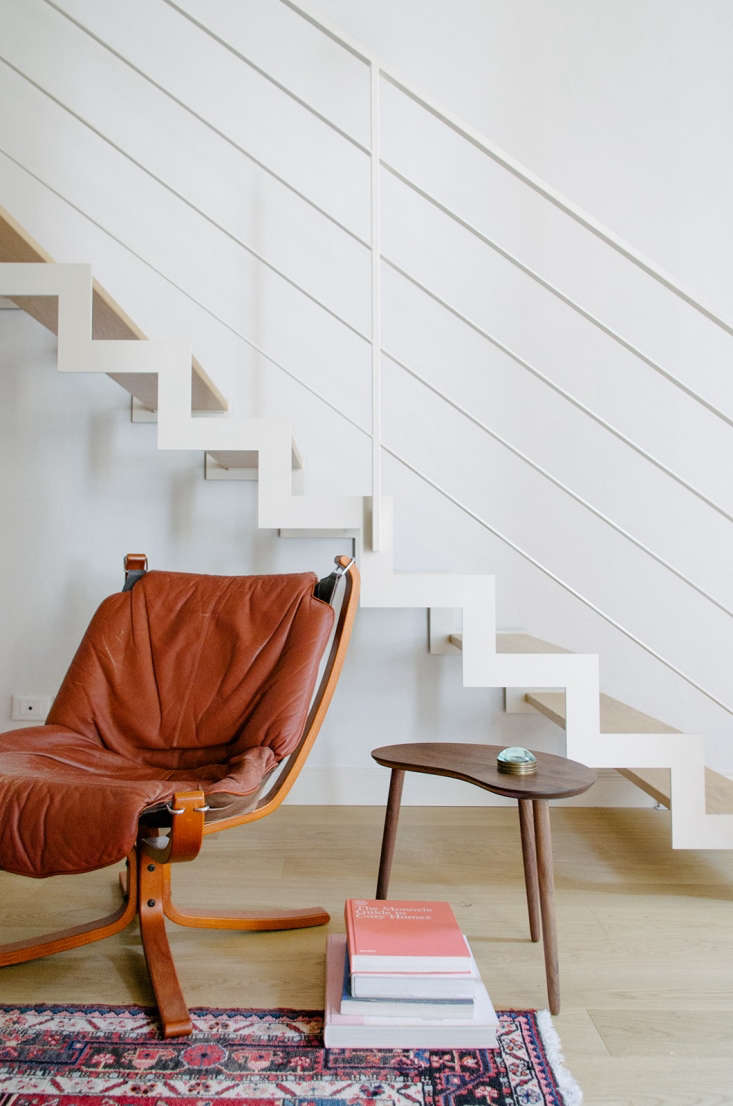
Above: Lofted mezzanine floors and bathrooms were added to the five apartments. Trotter sourced vintage furniture from France, Italy, and Portugal.
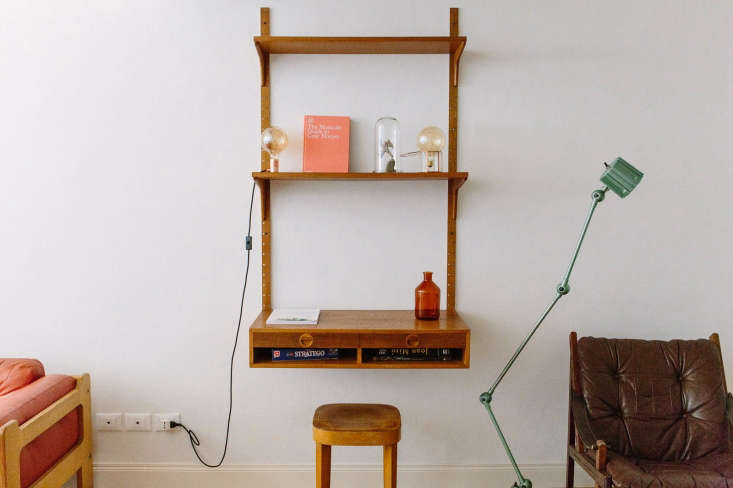
Above: A midcentury wall-mounted storage system in one of the apartments. The green industrial floor lamp is vintage from France.,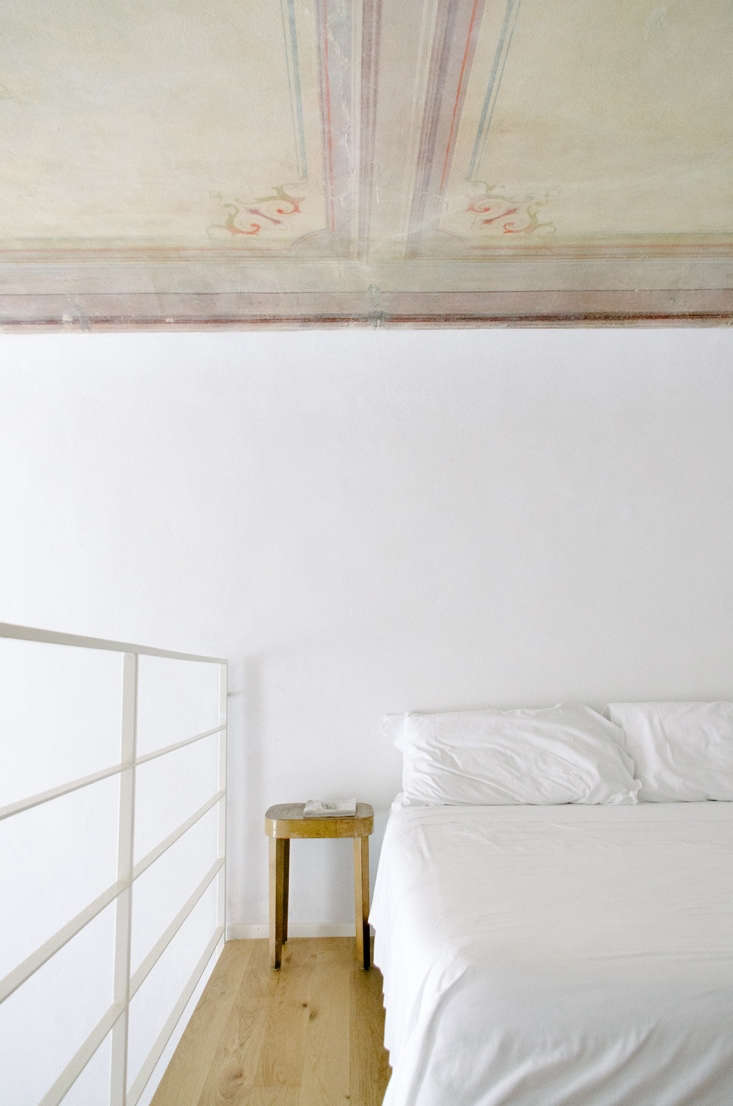
Above: The original fresco ceilings contrast with the newly painted white walls.
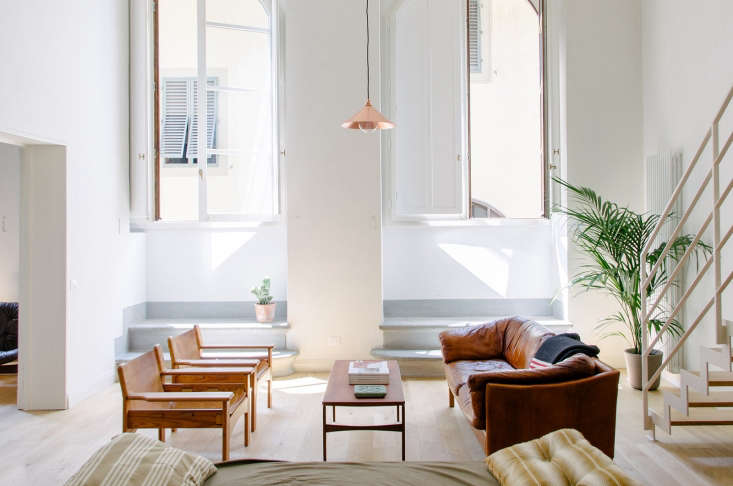
Above: In the open living room, the chairs are vintage from Ox Mobiliari in Barcelona and the sofa was sourced in Portugal. The hanging copper pendant is the Frama Large Cone Shade.

Above: A midcentury desk with a Michael Anastassiades IC T2 Table Lamp.
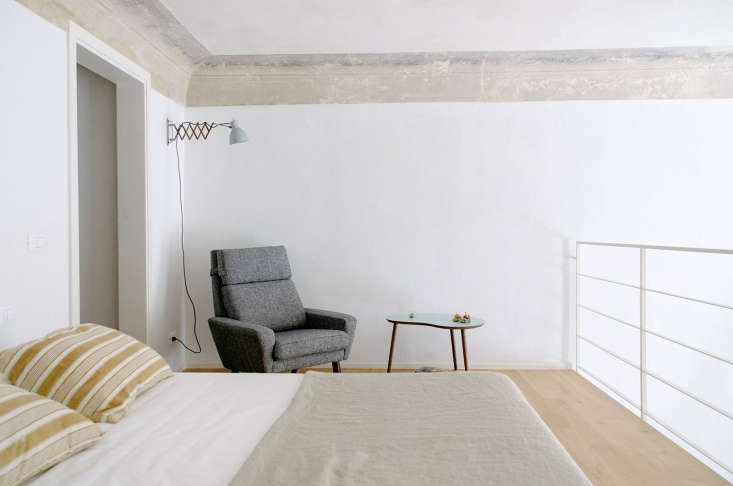
Above: The decor is kept spare; spaces were designed as an antidote to fast-paced living.

Above: Wool blankets were designed with the Lottozero textile center during a residency at Numeroventi.,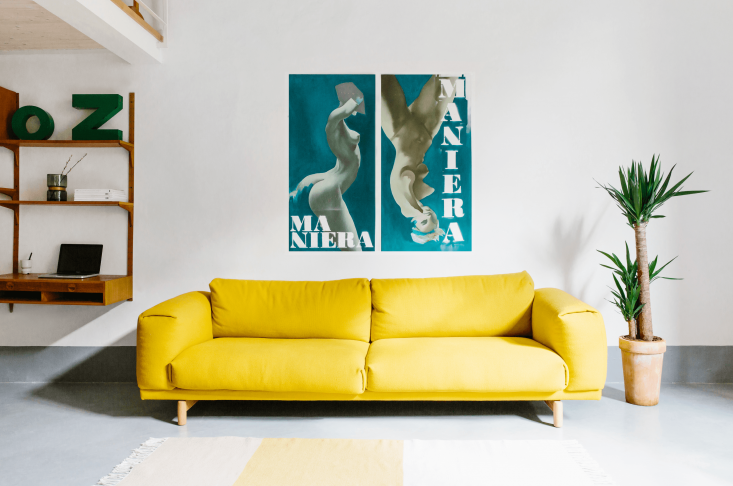
Above: The bright sofa is the Muuto Rest 2-Seater Sofa. Artwork above is by Kreshnik Aliaj, an artist hosted at Numeroventi’s residency.
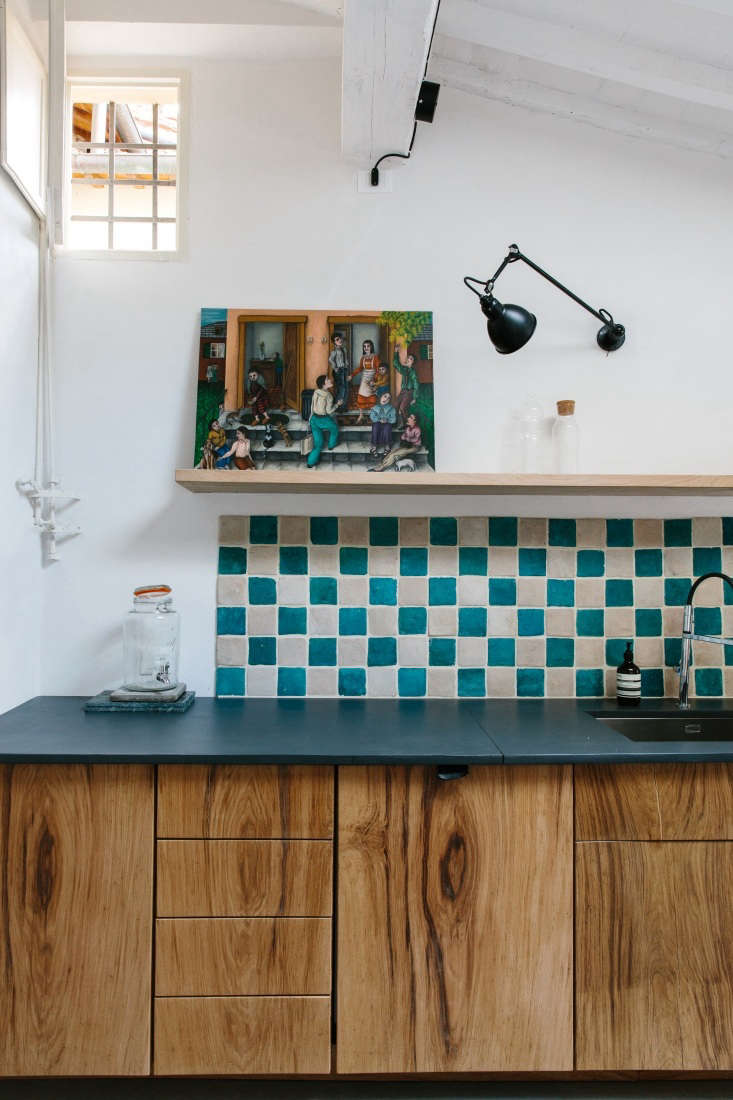
Above: Each guest room is kitted out with a kitchenette. This one has custom wood cabinets, soapstone counters, and a backsplash of handmade tile.
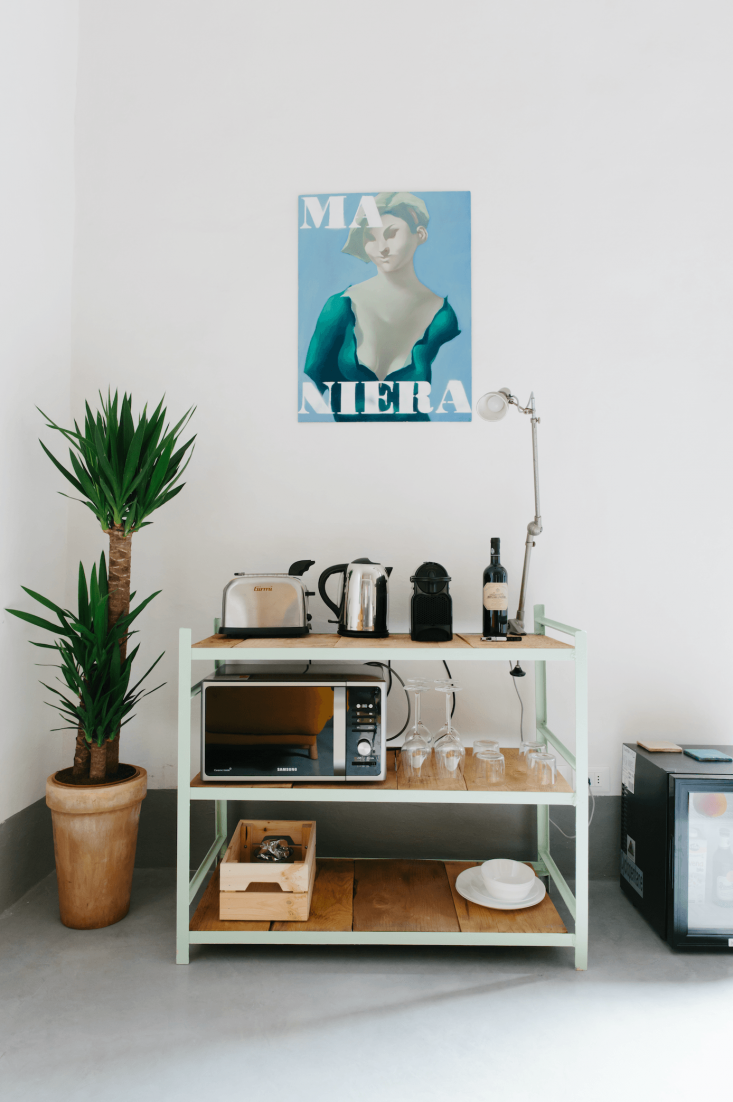
Above: The extension of another kitchenette with a cart. Rampolla and Trotter found an old metal structure in the cellar that they painted and fitted with new wood shelves. The print above is another work by Kreshnik Aliaj.
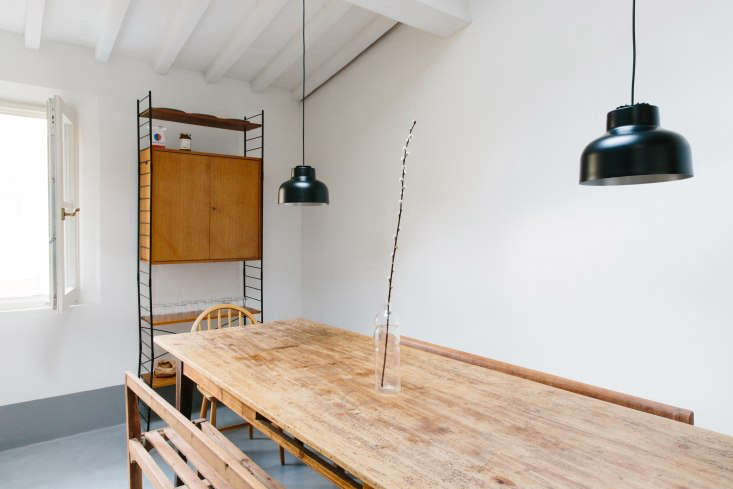
Above: The charm of disparate elements—midcentury vintage, farmhouse furniture, and modern lighting—makes up the dining area in one of the apartments. On the table a Serax Water Bottle functions as a vase.,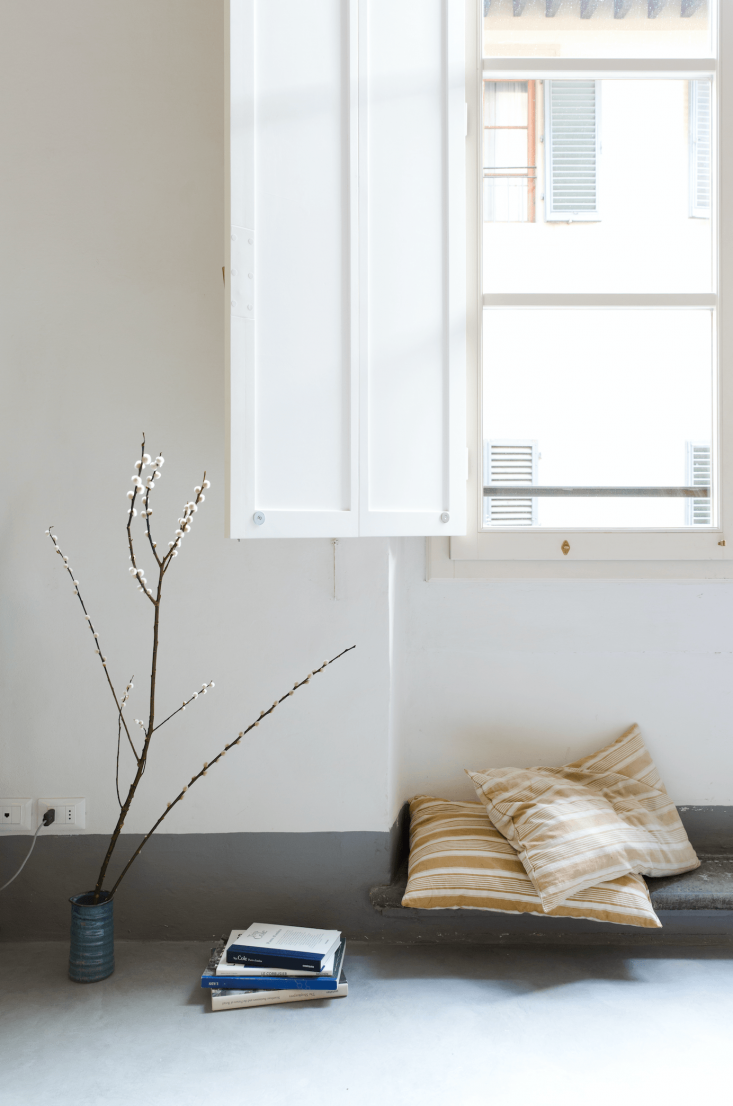
Above: The floors are a gray resin made by local artisans. The stone beneath the windows is also local, called Pietra Serena.
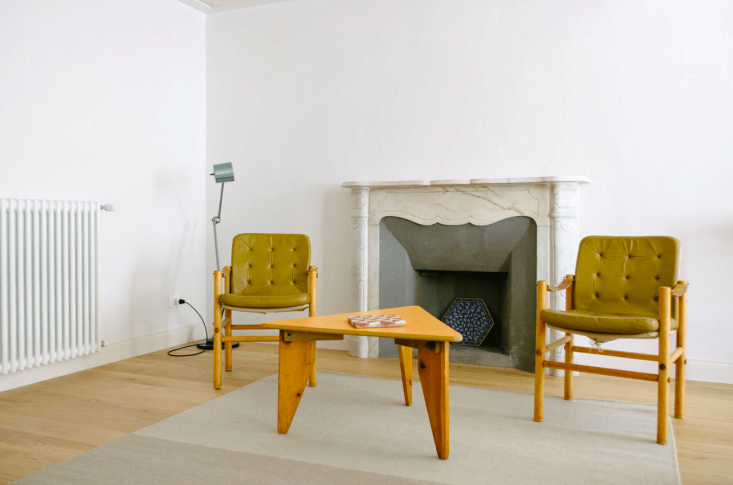
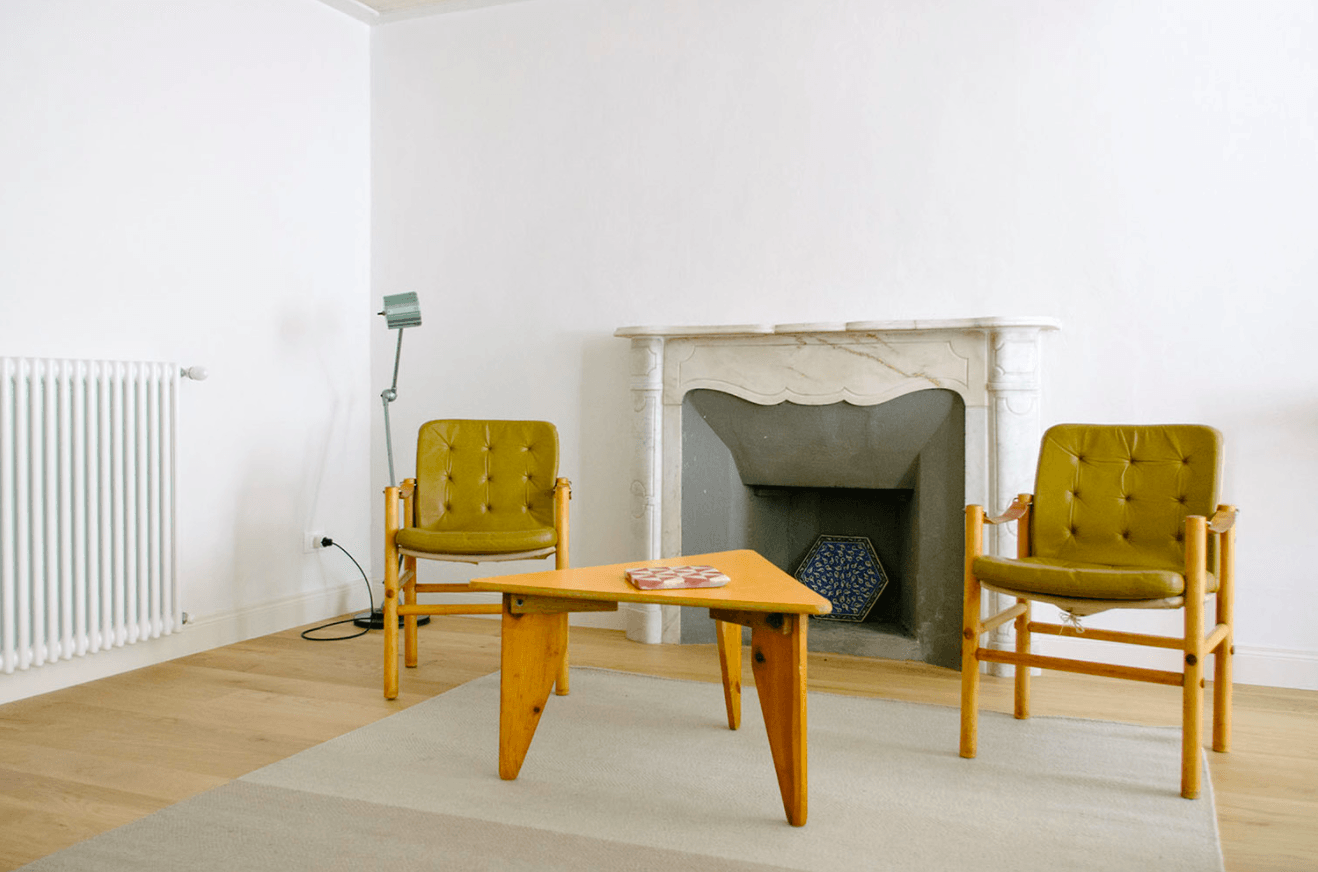
Above: One of the living room apartments with an original marble fireplace, vintage Italian chairs from Portugal, a vintage primary school table, and a rug from Ferm Living.
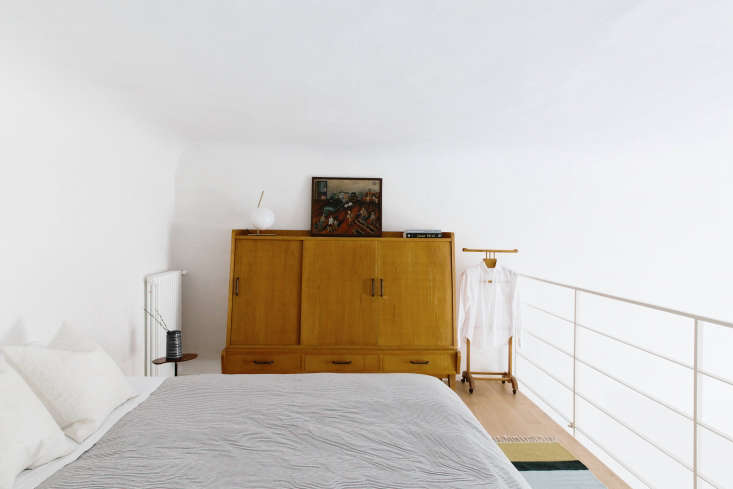
Above: A large antique armoire was brought up to one of the mezzanine bedrooms. The rug is the Kelim Semicircle Rug from Ferm Living.
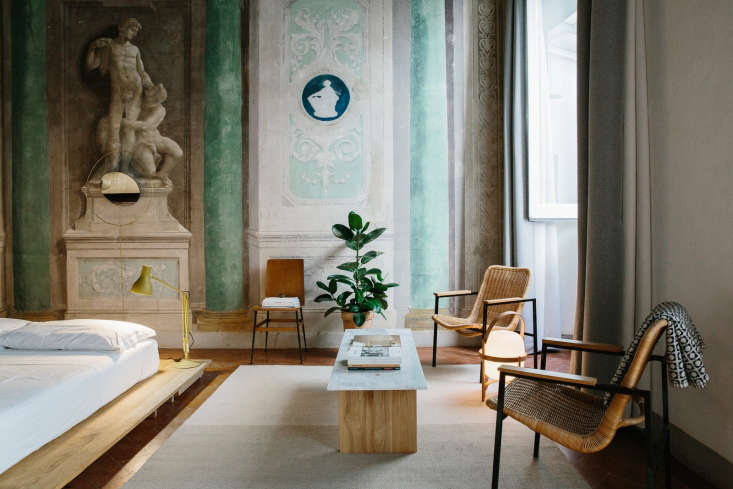
Above: The apartment on the third floor has recently functioned as a gallery space (it’s now being converted into another guest room). Numeroventi designed the bed after Donald Judd’s bed at Spring Street in New York City and the yellow lights are Margaret Howell for Anglepoise.,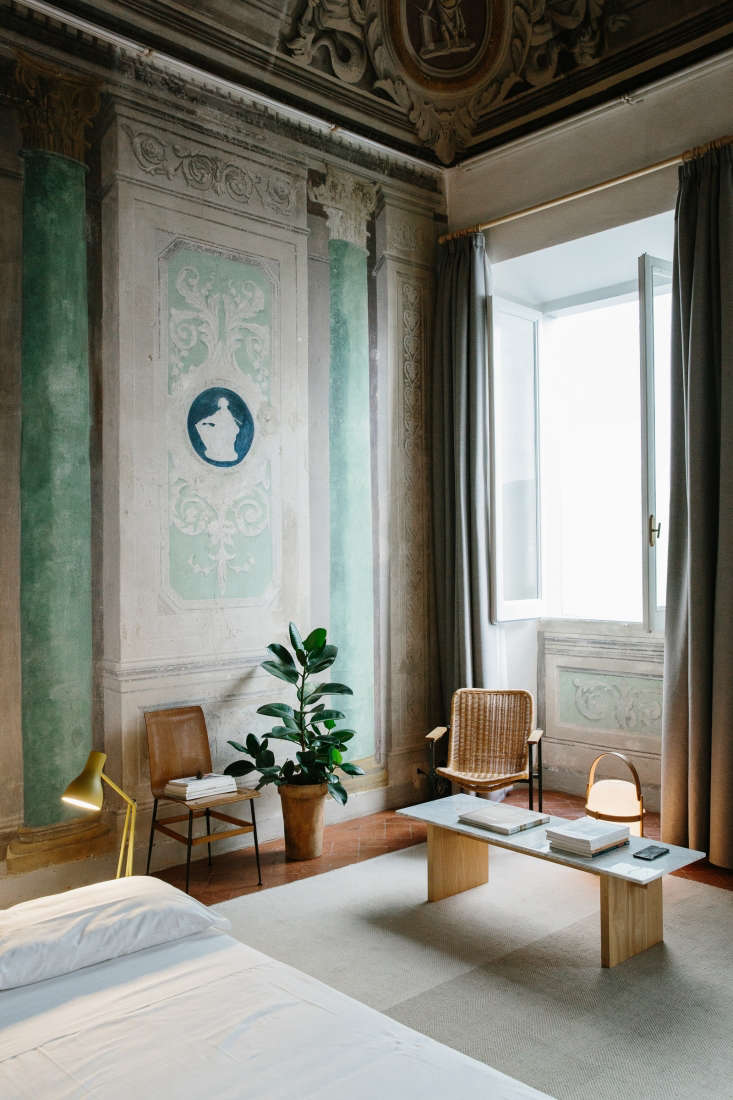
Above: The vintage chairs are from Antwerp and the coffee table is the Normann Copnehagen Solid Table. The light on the floor is the Cestita Table Lamp by Miguel Mila.
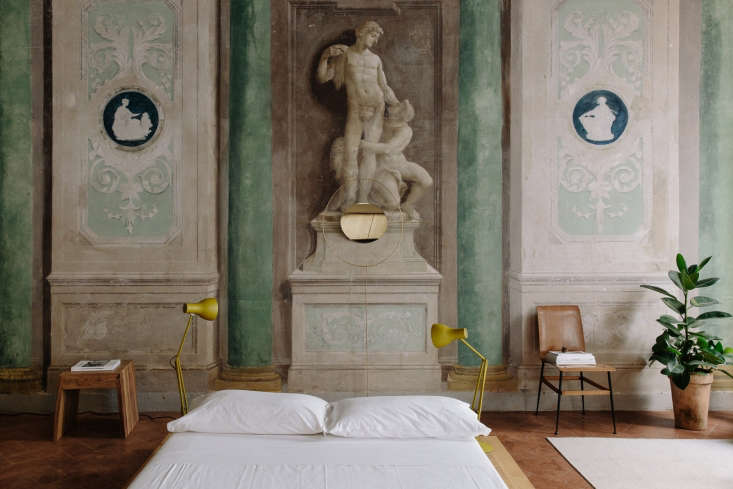
Above: One of the Florentine families who lived in the palazzo had frescos painted throughout the building for their son’s wedding.

Above: Numeroventi restored and painted the wire bench and made the wood side table custom. The light is the Michael Anastassiades IC T2 Table Lamp.
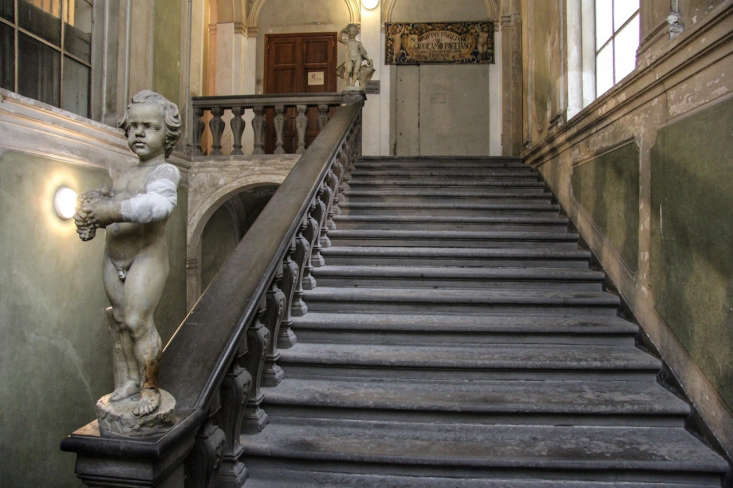
Above: Stairs from the courtyard up to Numeroventi. It’s documented that a piece of the courtyard stone here was used to support Michelangelo’s
David.
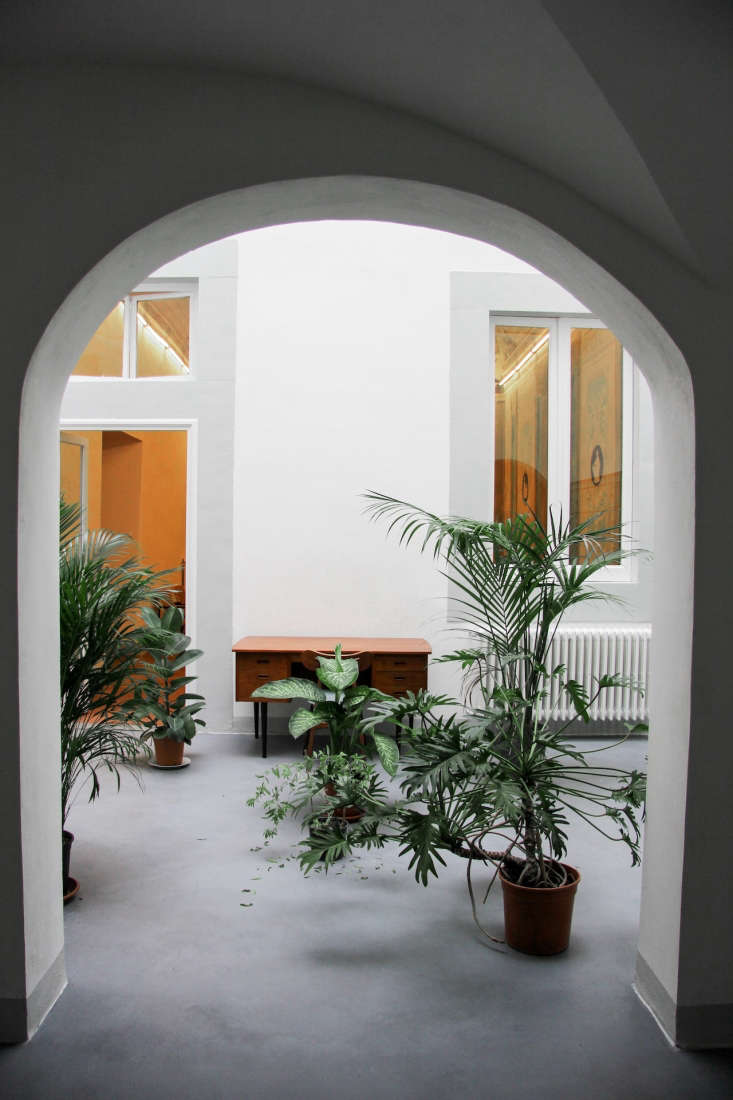
Above: Potted plants and a midcentury desk at the entrance.
For another one of Andrew Trotter’s projects, see our post A Modern Masseria in Puglia with Traditional Influences.