“Our work is underpinned by a philosophy of reuse,” writes London designer Maria Speake. “Materiality is part of the fun of life in our studio—we always try to incorporate reclaimed materials and demonstrate how old and rejected materials are still relevant.” Speake’s castoffs come from Retrouvius, the combination salvage business and interior design office she runs with her husband, Adam Hills—he does the hunting and gathering, she leads the design team.
We’ve been avidly following their work for years: in 2009, Julie spotlighted Retrouvius’s use of glass funnels as hanging lampshades. More recently, we featured their Rustic Remodel of a Notting Hill Townhouse, Bathroom Designs Featuring Vintage Components, and Use of Salvage in Contemporary Kitchen Designs.
By popular demand, here are five more examples of the Retrouvius way with kitchens, all starring, in Maria’s words, “old and rejected materials elevated by being treated with a modern language.”
Photography courtesy of Retrouvius.
An Oxfordshire New Build Known as The Tennis Court House
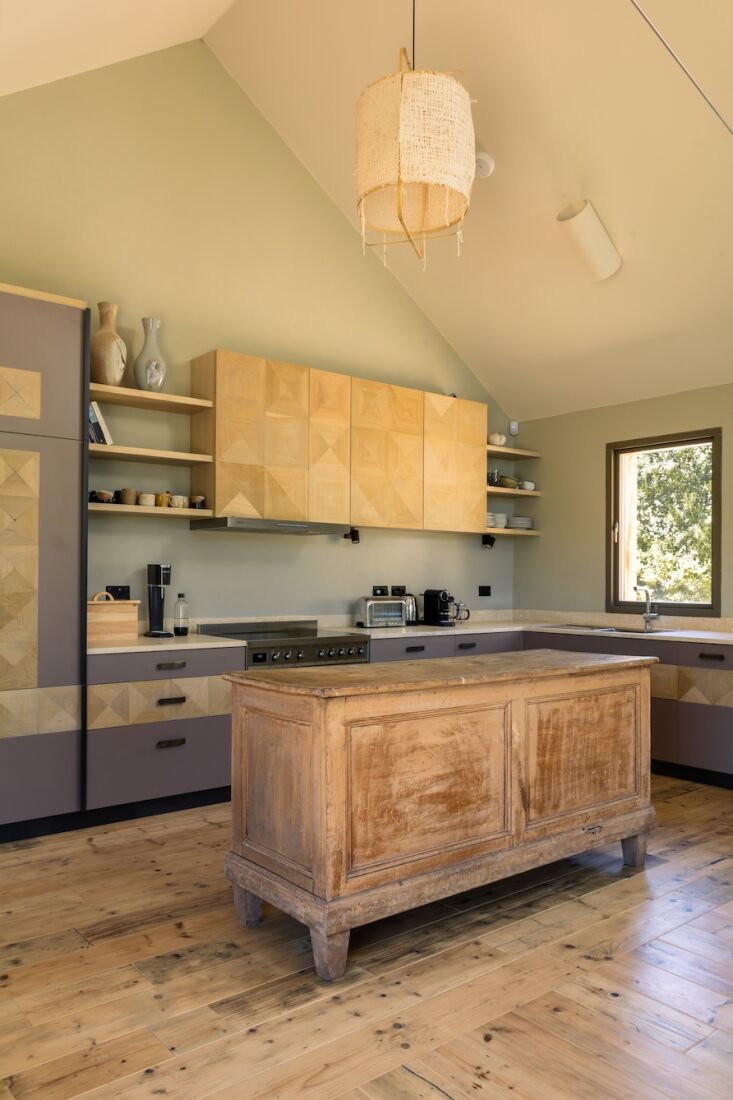
Above: In a house built for a writer, Retrouvius detailed the cabinet fronts with salvaged oak parquet flooring. And engineered the reused pine flooring to work with under-floor heating. A rescued bakery counter made for pounding dough anchors the room as an island with open storage in the back.
Bella Freud’s London Kitchen
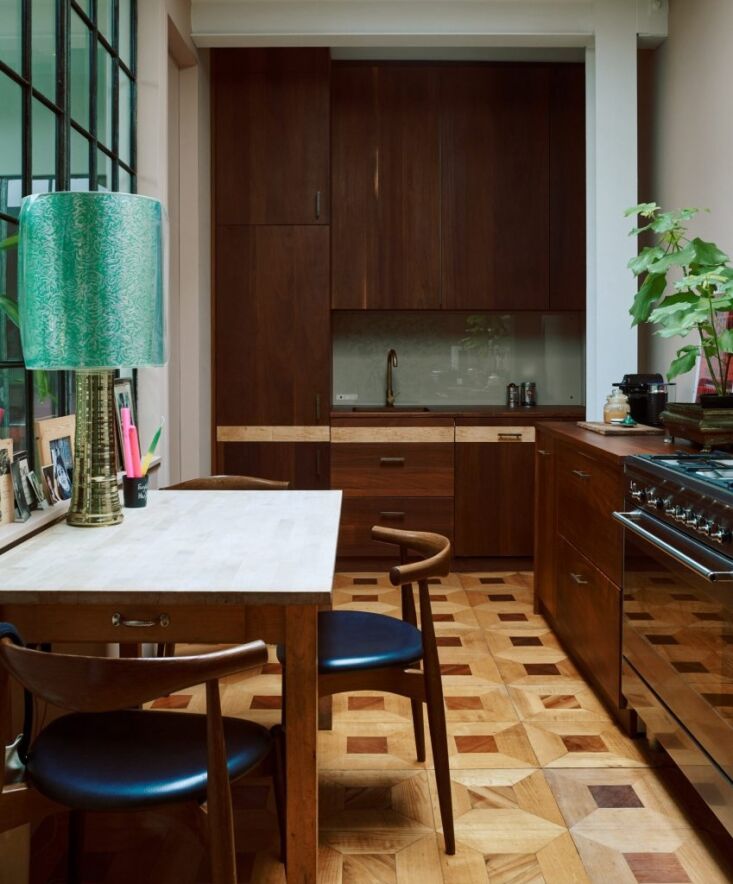
Above: Internal Crittal windows salvaged from Battersea Power Station link fashion designer Bella Freud’s kitchen to the main living space in her West London home. The cabinet doors and countertops are reclaimed iroko, a hardwood that Retrouvius often salvages from school lab worktops. Photograph by Michael Sinclair.,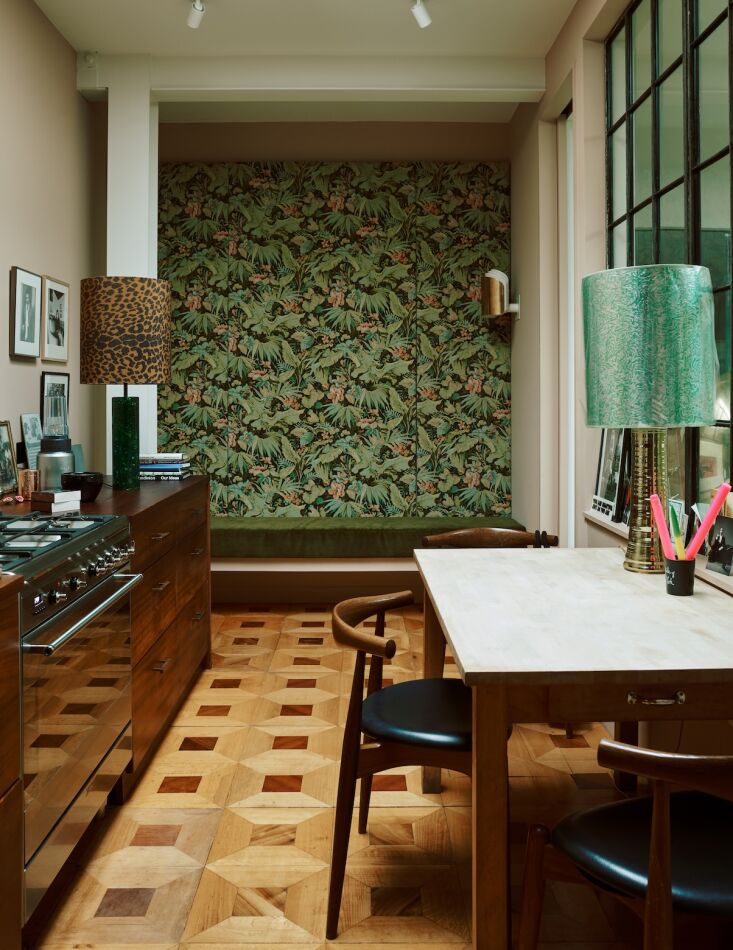
Above: The patterned back wall is vintage tropical curtain fabric applied to panels to create a “verdant, Henri Rousseau-esque effect.” The geometric flooring is reused parquet panels. Go to
Australian Vogue to see more of the house, which itself is a reinvented relic. Photograph by Michael Sinclair.
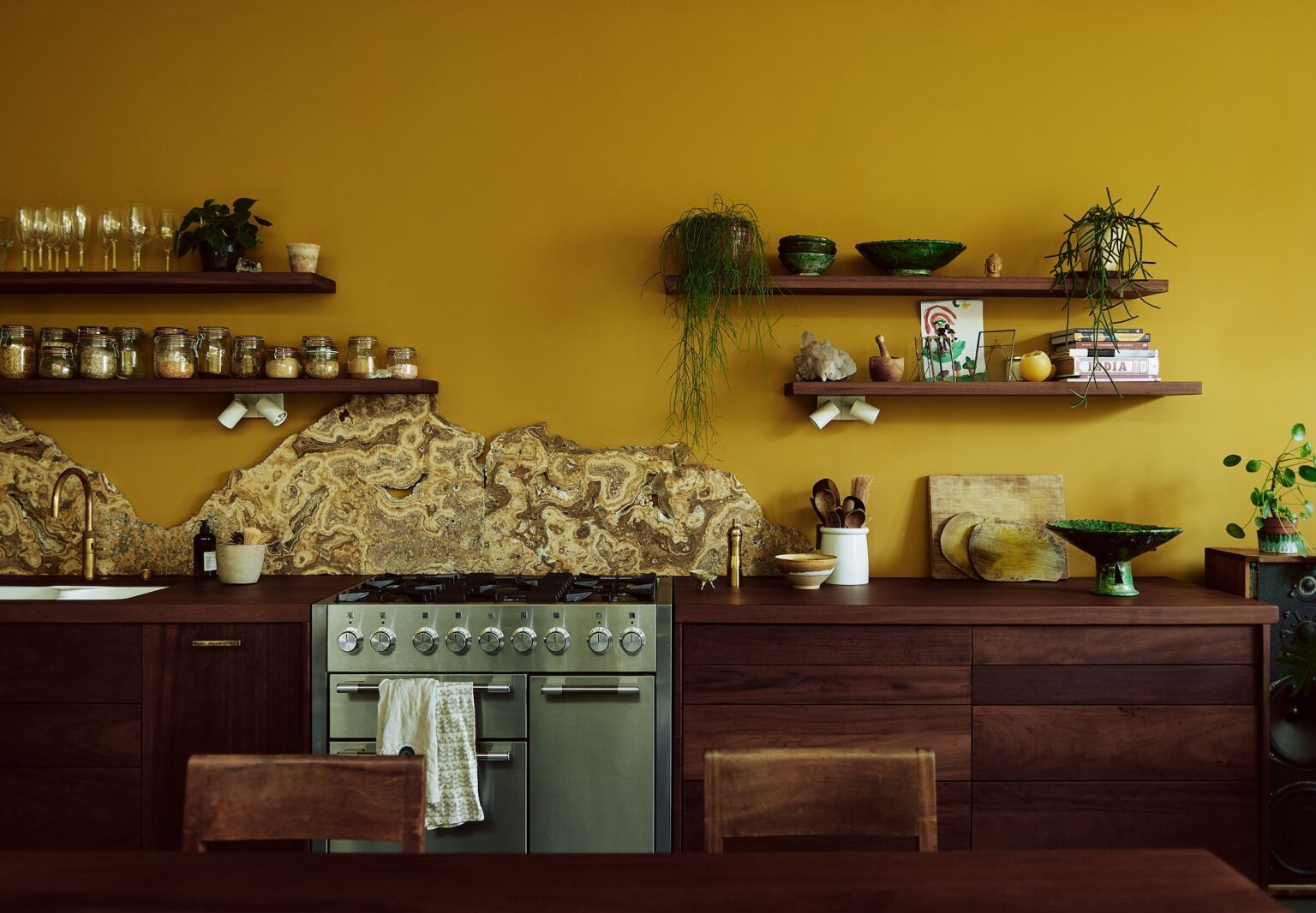
A West London Family Home with a Backsplash of Castoff Onyx
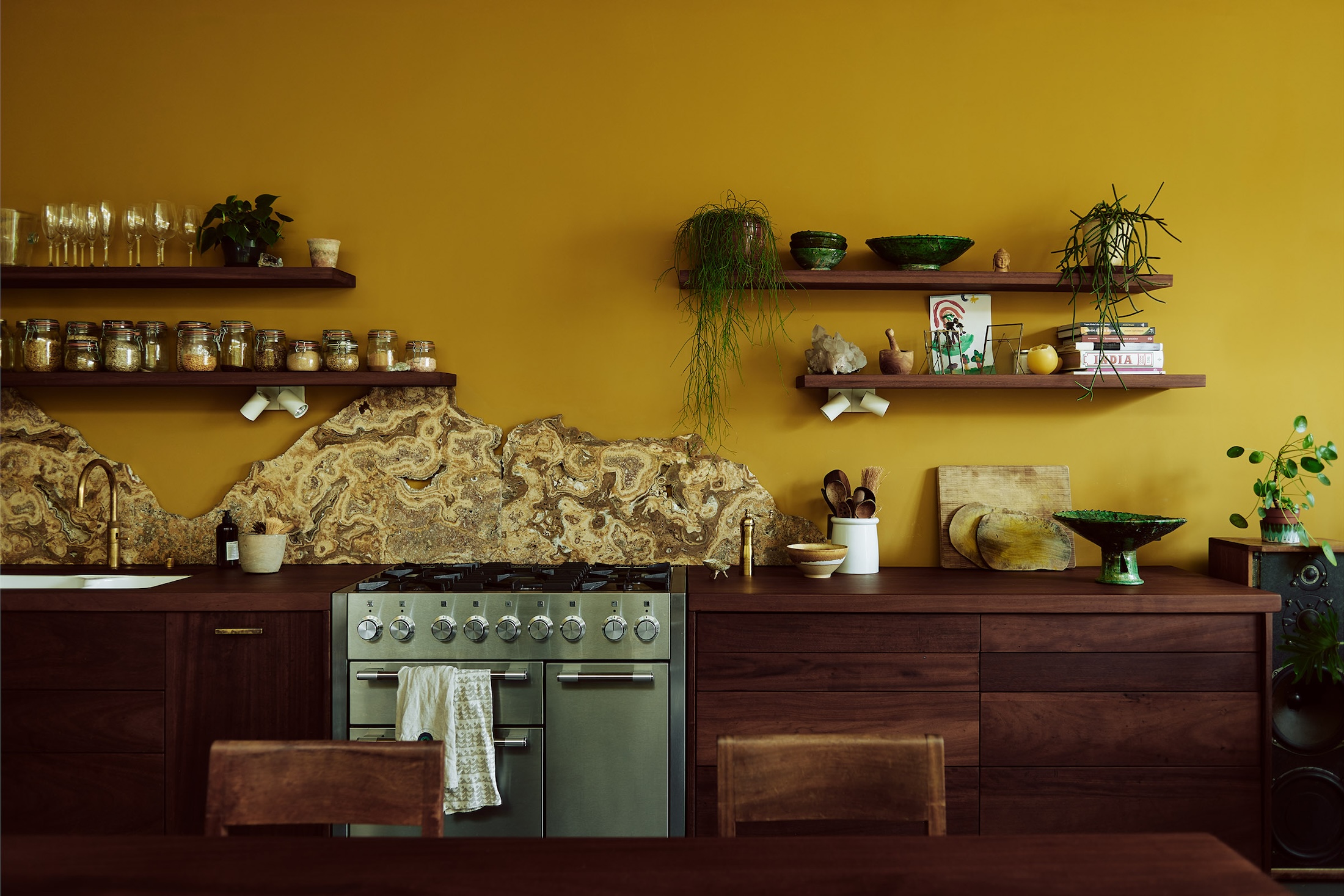
Above: Live edge backsplashes are a signature Retrouvius use of stone remnants. “Try to work with salvaged stone in its existing format and dimensions: pieces that are often discarded when stone is trimmed can have a sculptural quality,” writes Maria in the Retrouvius Guide to Using Reclaimed Stone. “Here, we used an old Italian onyx, Alabastro Fiorito.” See another of the company’s stone backsplashes in A Rustic Townhouse by London’s Masters of Salvage. Photograph by Michael Sinclair.
Salvaged Cheeseboards as Cabinet Fronts in a North London Family Home
,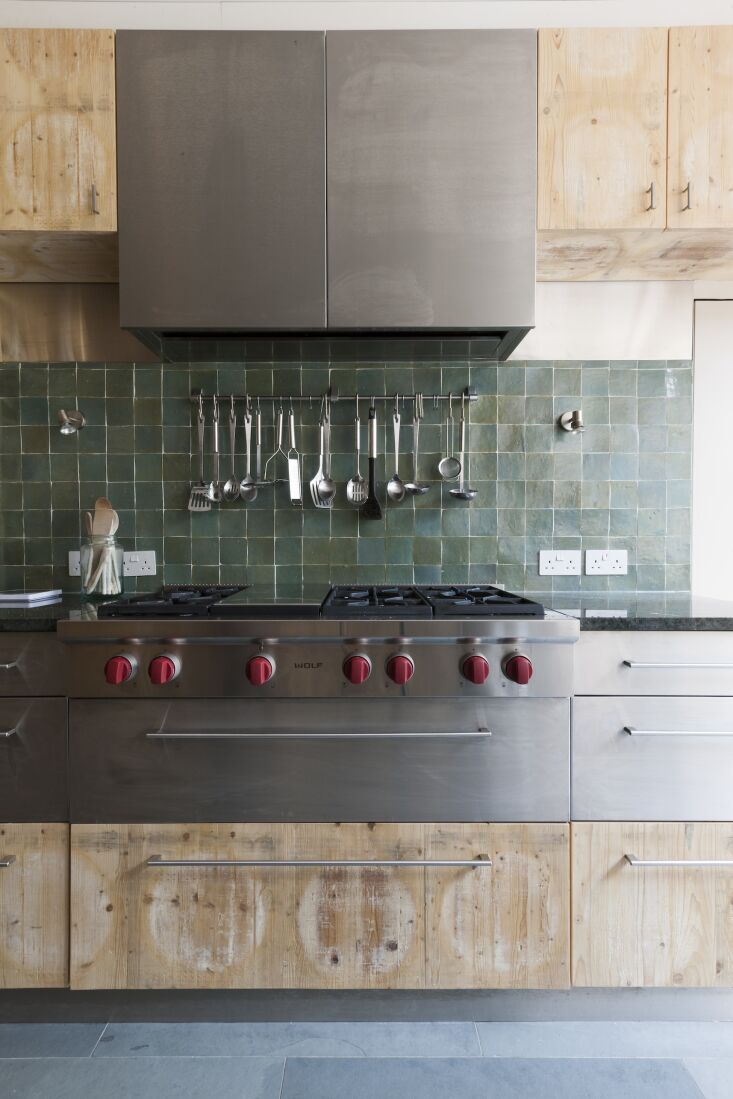
Above: Cheese boards—the wood on which wheels of cheese once sat to age, leaving a ghost imprint—are here used as cabinet fronts in a kitchen also detailed in stainless steel. The backsplash tiles are Emery & Cie zellige. Photograph by Tom Fallon.
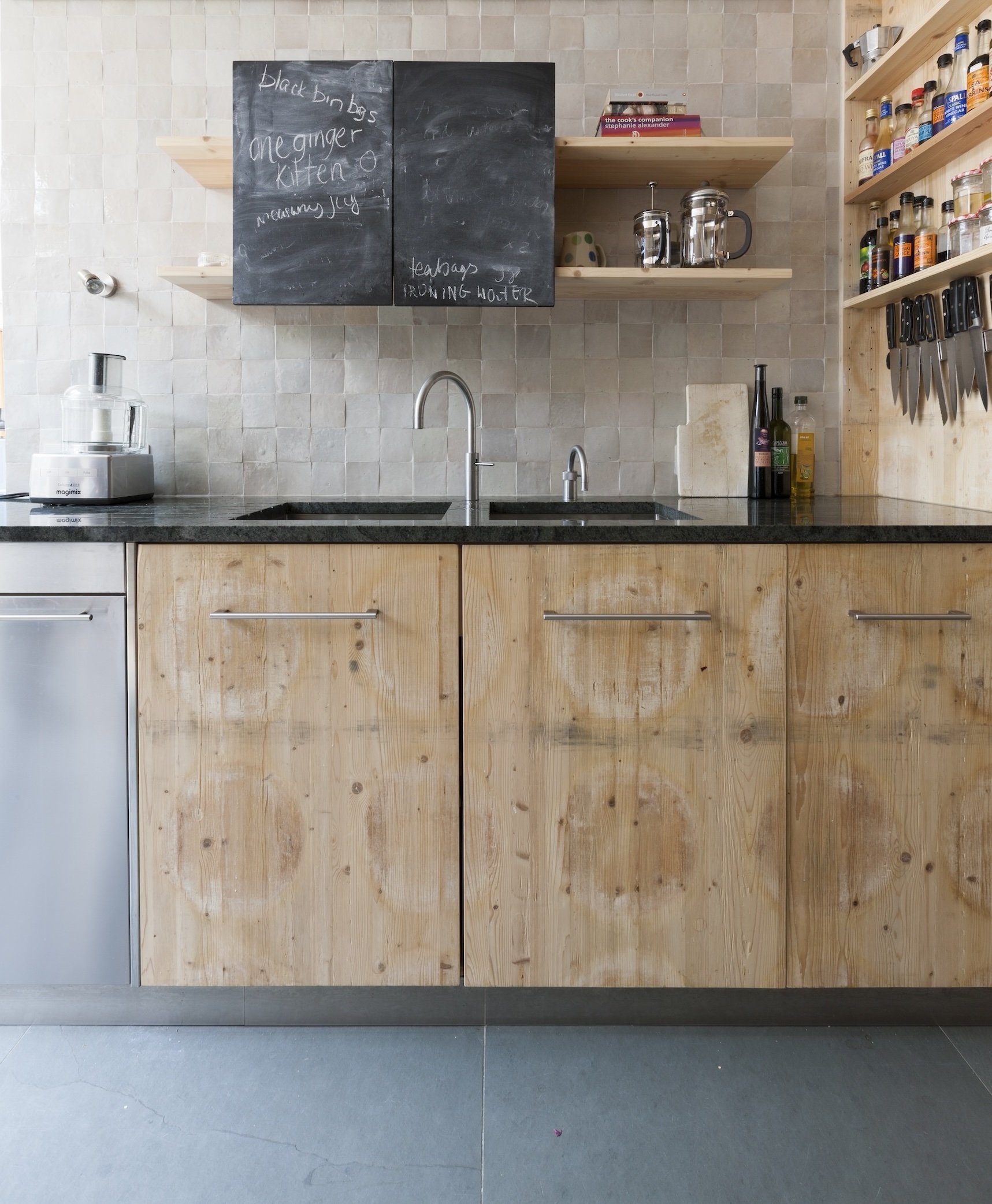
Above: Chalkboard paint on reclaimed wood equals cabinet doors you can write on. Photograph by Tom Fallon.
Salvaged Museum Lockers as Storage in Hampstead
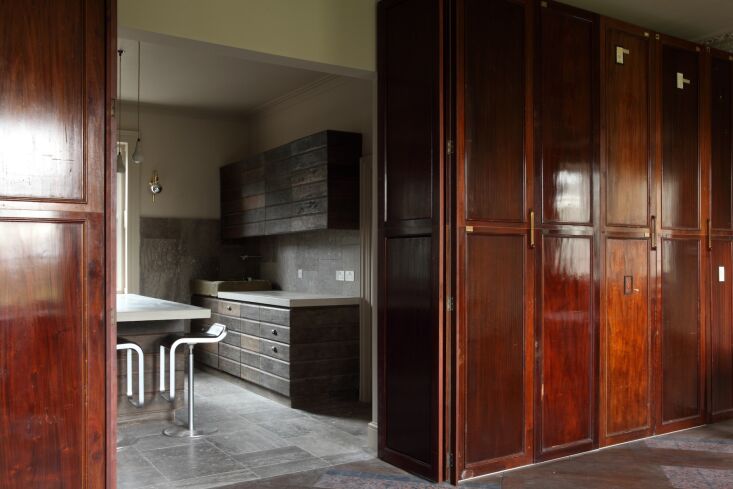
Above: Mahogany panels from the archive department of an old museum serve as the fronts on floor-to-ceiling cupboards and folding doors that divide the dining room from the kitchen in a North London family home. Photograph by Jo Bridge.
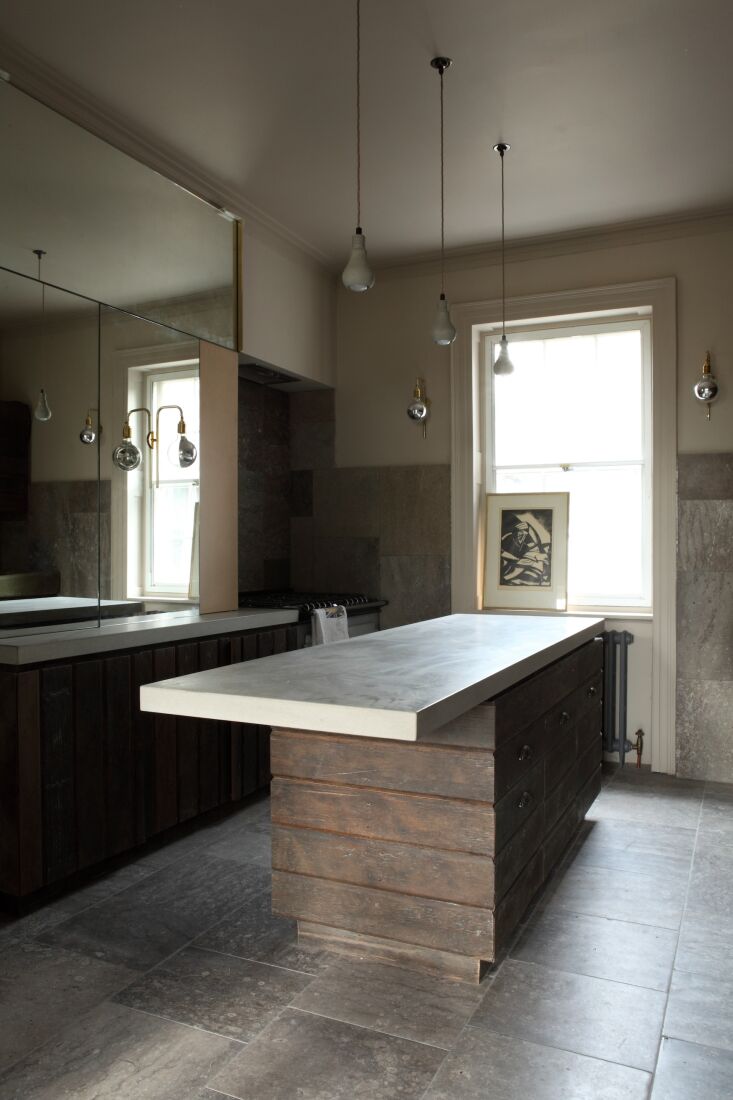
Above: A cantilevered stone island counter rests on “V-boarded hardwood originally from railway freight cars.” The flooring is fossilized limestone salvaged from Heathrow’s Terminal II. Photograph by Jo Bridge.
More creative reuse in the kitchen:
- A Clever Kitchen Composed of Affordable Recycled Parts
- A Tiny Reclaimed Kitchen Designed in a Wink
- Steal This Look: A Modular Salvaged Kitchen in Sonoma
- Moody By Design: An Artist Couple’s Hauntingly Beautiful Quarters in York