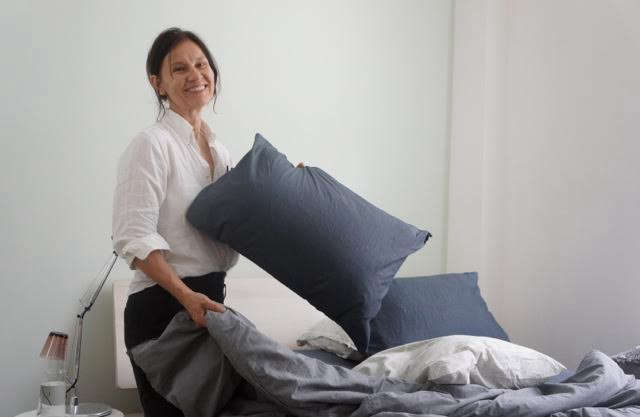
Anki Spets has been out to improve American slumber since 1990. Back then, she was a Swedish fashion designer new to NYC and dismayed by the wrinkle-proof, mixed blend sheets that dominated the US market. Years before Ikea and Scandi style arrived on the home front, way before bedding disruptors entered the picture, her business, Area Home, was all about natural fibers in Swedish-inspired patterns and palettes from fair trade sources.
In addition to natural materials, Anki is all about comfort and casualness (she even builds rumples into her designs). But there’s another a crucial element to her bed making: mine and yours duvets on a shared mattress.“It’s a Scandinavian and Northern European thing that has so many advantages, including better sleep,” she told me—and then offered to share how it’s done. Here, her photographic explanation. As we hunker down for the winter, this simple approach just might be the answer to harmony at house—or, at the least, better bedfellows and more REM. Try it and please report.
Photography courtesy of Area Home.
Step 1: The Basic Bed Trio
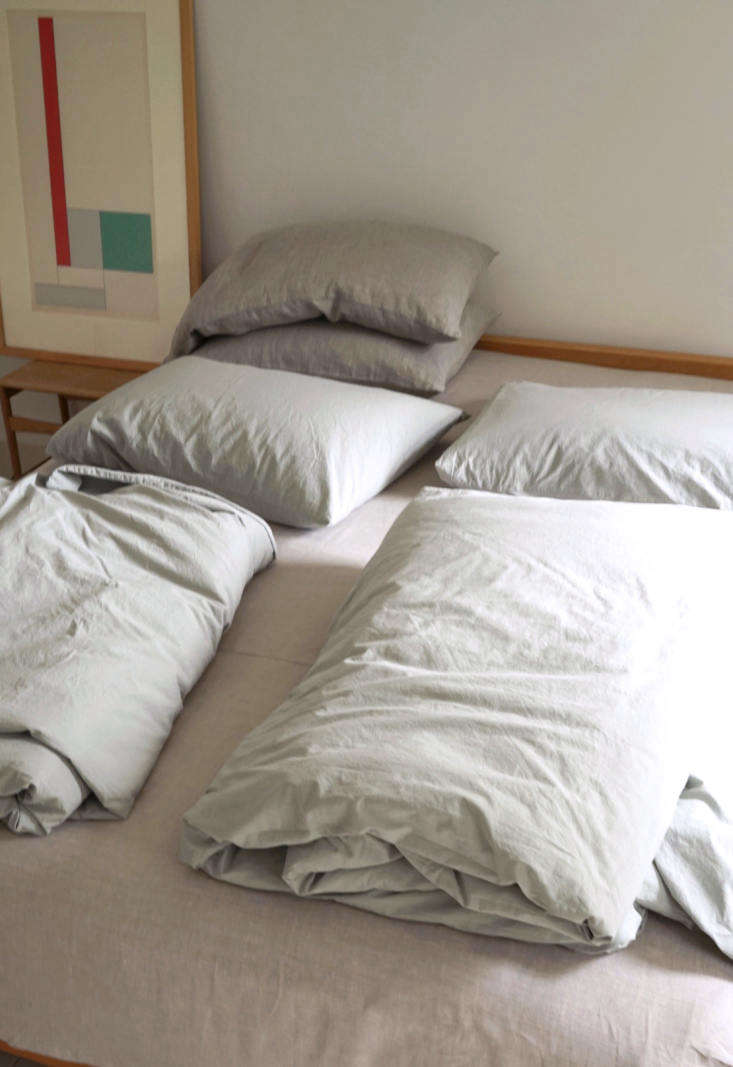
Above: “Begin with a bottom sheet, as many pillows as you like, and twin duvets—we just use duvet covers, no top sheets,” specifies Anki. Go to Linen Logic to read her tips for taking care of your bedding.
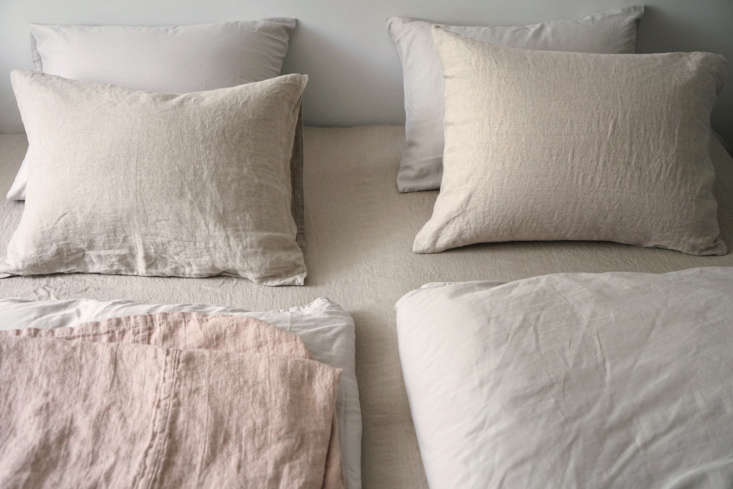
Above: Area Home’s Simone Fitted Sheet and Simone Pillowcases of pre-washed organic cotton-percale and Perla duvet covers (right). The pale pink linen is the Elias Blanket in Powder.
The advantages of two duvets include no longer having to battle for coverage and being able to cater to different temperature preferences: one duvet can be a furnace, the other a featherweight. “Maybe you’ve been on your own for too long and it’s time to share a bed, or you’ve shared a bed–and cover—and cannot seem to find peace,” says Anki. “More and more customers are asking for twin duvets; some take things a step further and push two twin beds together.” (The New York Times recently covered the latter trend in “Is It Time for a Sleep Divorce?”)
,
Step 2: Fold the Duvets
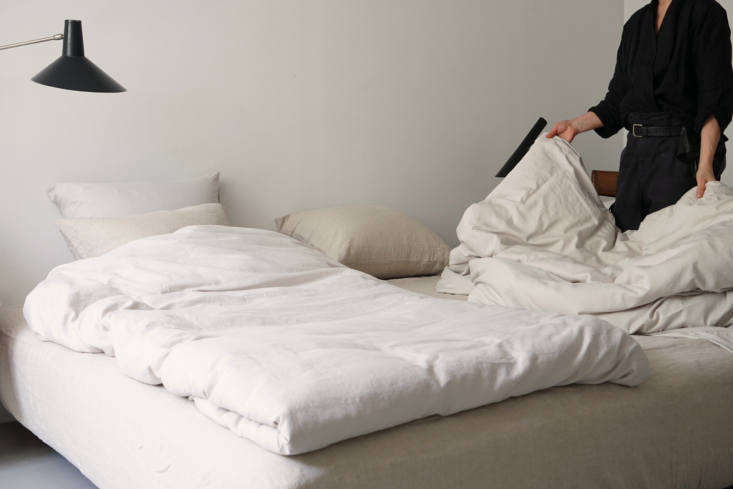
Above: Think burrito-style: fold in the sides of each comforter and flip the bottom up, then turn over. Position side by side, so each duvet has equal real estate.
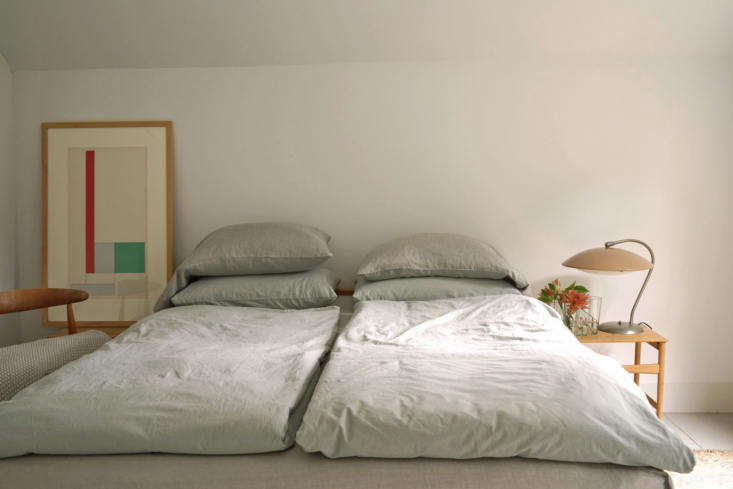
Above: The bed is made in minutes. The organic cotton-percale Anton Duvet Covers and Anton Pillowcases are another of Area Home’s pre-washed designs, so the fabric is invitingly soft from the get-go. (The company remains independently owned and Anki designs all. Read about Area Home’s sourcing and packaging practices here.)
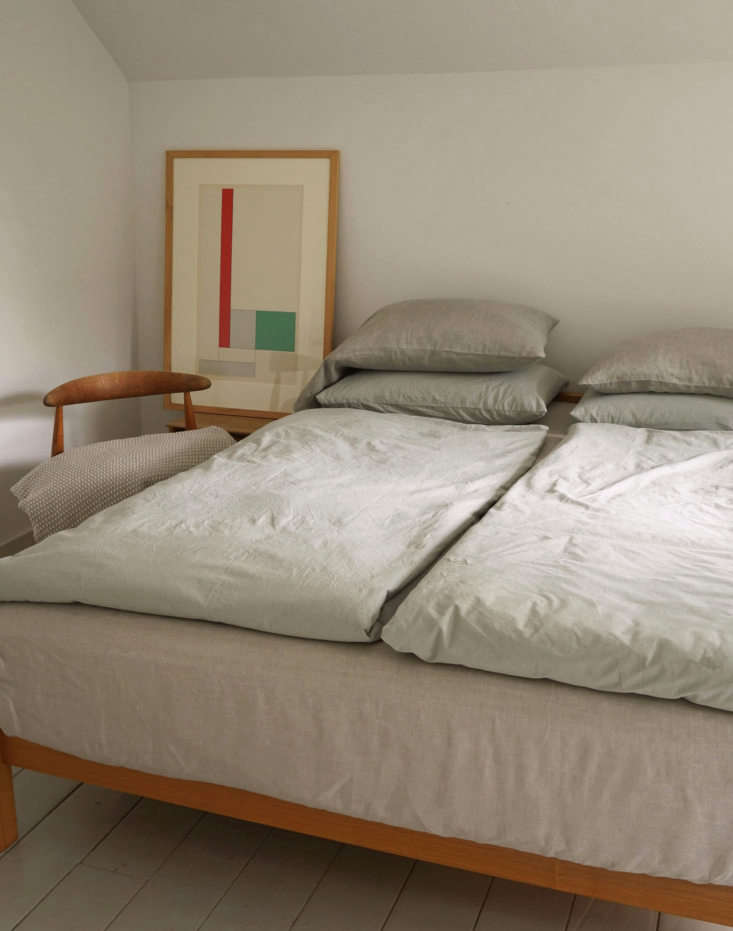
Above: Interesting wrinkle: Anki shot this at her friend Lisa Trollback’s Brooklyn townhouse—which we coincidentally featured in our first book and on our site as Nordic Beauty.
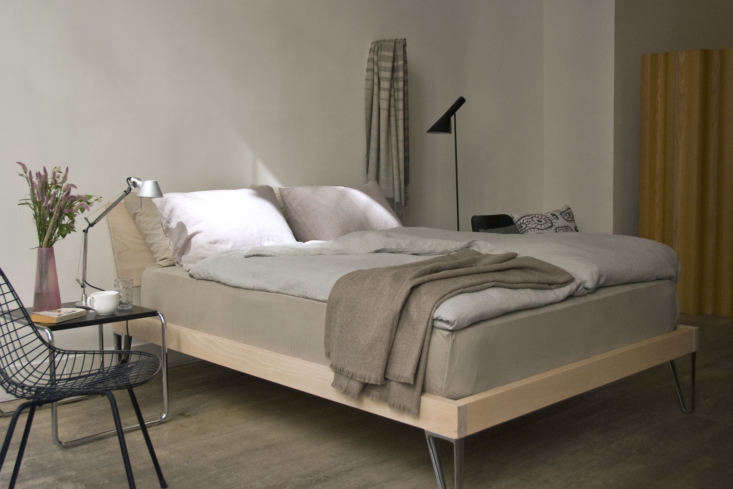
Above: Dual duvets on Area Home’s Bruno Bed in FSC-certified whitewashed ash. The Liam Throw, $290, is made of 100 percent baby alpaca: “close in fineness to cashmere yet more sustainable and doesn’t pill,” says Anki.
(Optional) Step 3: The Frosting on Top
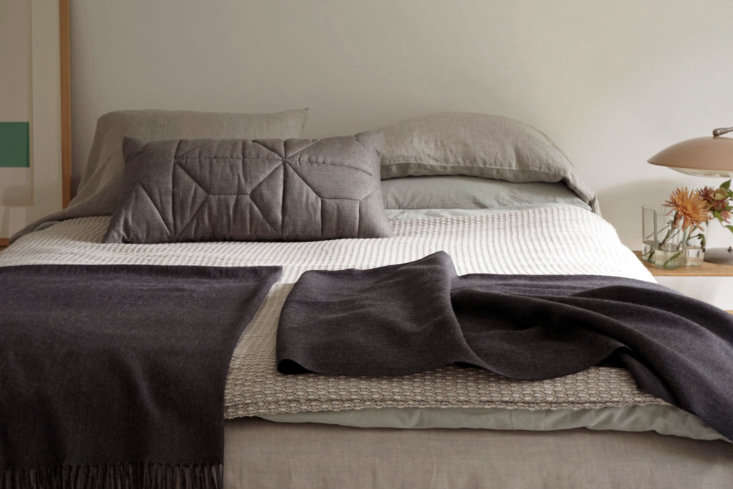
Above: “For a more finished look and extra warmth, you can add a top blanket and throws,” says Anki. Shown here is her cotton Theo blanket, Elliot Throws, and Gemma Decorative Pillow.
Above: Anki celebrated Area Home’s 30th+ year with a NYC outpost at 1 Fifth Avenue. She also has a store on West Third Street in West LA, near our longstanding hangout Joan’s on Third. Photograph by Catarina Lundgren Åström.
N.B. This post is an update; it originally ran on Nov 19, 2019.
How to make a better bed? Here’s more wisdom:
- Pillow Talk: 7 Secrets to Making a Perfect Bed
- Expert Advice: Proper Bed-Making 101, How to Make Square Corners
- Domestic Science: How to Clean a Mattress