Maria Ibañez de Sendadiano en Todd Rouhe leerden elkaar kennen op hun werk toen ze allebei jonge architecten waren bij Smith-Miller + Hawkinson. Dat is lang geleden: het stel runt sinds 2000 hun eigen bureau IdS/R Architecture in NYC, heeft twee dochters die nu tieners zijn en bevond zich onlangs in de gelukkige omstandigheid dat ze hun eigen buitenverblijf konden bouwen in de Catskill Mountains in New York.
Na jaren als gezin in de omgeving te hebben gewandeld en gekampeerd, kochten ze een uitgekozen stuk land in de gemeente Mount Tremper, omgeven door beschermd gebied dat eigendom is van DEP (het ligt in de waterscheiding die het leidingwater van NYC levert). Dit was hun eerste huis dat vanaf de grond werd ontworpen en gaf hen de kans om ideeën uit te testen en om hun eigen handen flink vuil te maken.
Ze wilden vooral een structuur bouwen met zo min mogelijk impact en besloten daarom de Passiefhuisnormen te volgen, een reeks strenge regels voor het creëren van een ultra-efficiënte, luchtdichte woning die grotendeels in zijn eigen energie voorziet via zonnepanelen. Om kosten te besparen en het ambitieuze bouwschema bij te houden, besloot het stel ook om samen op te treden als hun eigen hoofdaannemer. Het duurde zes maanden om het huis te bouwen en nog eens zes maanden om het interieur af te maken. Ga met ons mee het bos in.
Fotografie door Eric Petschek, met dank aan IdS/R Architecture en Vipp.
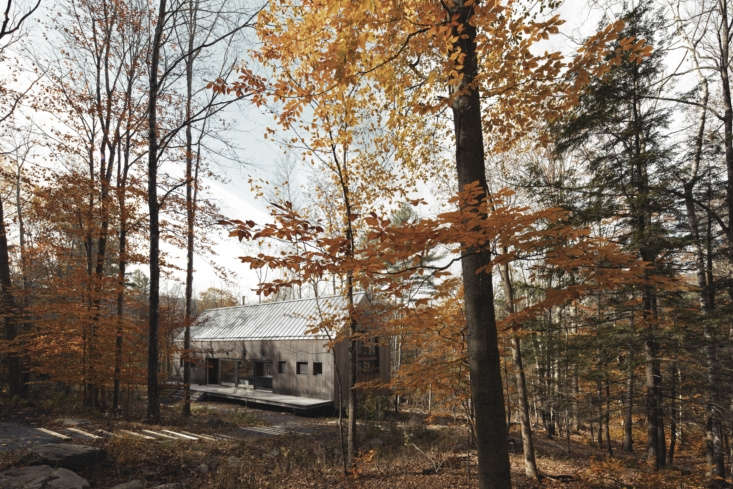
Boven: De structuur is gemodelleerd naar een traditionele longhouse lay-out en heeft een centrale leefruimte met slaapkamers aan beide uiteinden en multifunctionele zolderruimtes die daarboven zijn gestapeld.
Het gebouw bestaat uit SIP's (geprefabriceerde structurele geïsoleerde panelen), de bouwstenen van het Passiefhuis, en Todd merkt op dat dit mede het uiterlijk heeft bepaald: “Als je SIP's gebruikt, maak je geen glazen huis.” Het gebouw rust op een stalen geraamte dat op pijlers staat, legt Maria uit, “waardoor de bestaande drainage van het terrein minder wordt verstoord”. Een terrastrap leidt naar het terras aan de voorkant en vier glazen schuifdeuren (er zijn ook vier deuren aan de achterkant). De mechanische ruimte bevindt zich in een betonnen kelder en bevat onder andere het ERV-systeem (ventilatie met energieterugwinning) dat cruciaal is voor het Passiefhuis-ontwerp. De enige bomen die moesten worden omgehakt, maakten plaats voor de oprit.
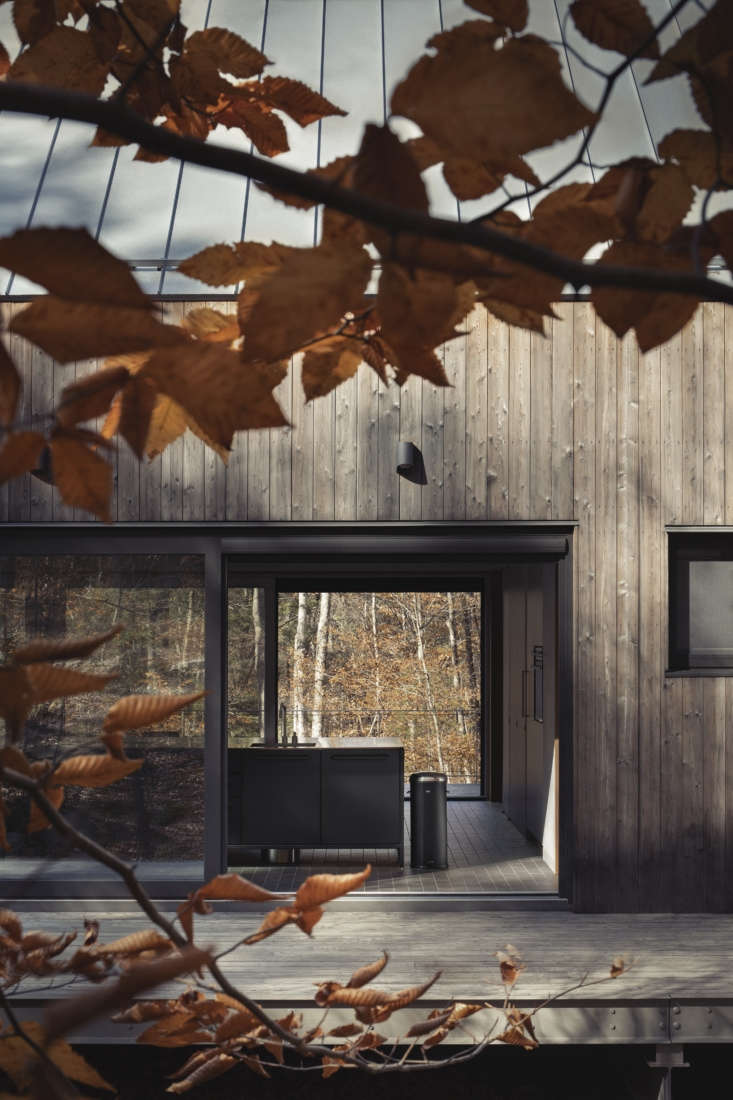
Boven: De buitenkant is bekleed met lariks, wat ook in het interieur is toegepast. Het heeft een metalen dak met staande naad, een favoriet van architecten (zie Hardscaping 101), en op het nabijgelegen septische veld staan 24 zonnepanelen die tussen mei en november genoeg stroom opwekken om alles in het huis te laten werken (“we verkopen zelfs stroom terug aan het net,” zegt Todd),
De thermisch geïsoleerde glazen deuren met aluminium frame zijn 8 bij 8 voet - ”de maximale maat voor een hefschuifdeur,” zegt Maria - en werden net als de ramen met driedubbel glas geleverd door Schüco. Deze, aan de noordkant van het huis, opent naar de keuken, uitgerust met een vrijstaand eiland gemaakt door Vipp uit Denemarken. Dat is ook de iconische Vipp pedaalemmer op de voorgrond (we hebben hem uitgekozen in Remodelista, een handleiding voor het doordachte huis in onze verzameling van 100 favoriete alledaagse voorwerpen).
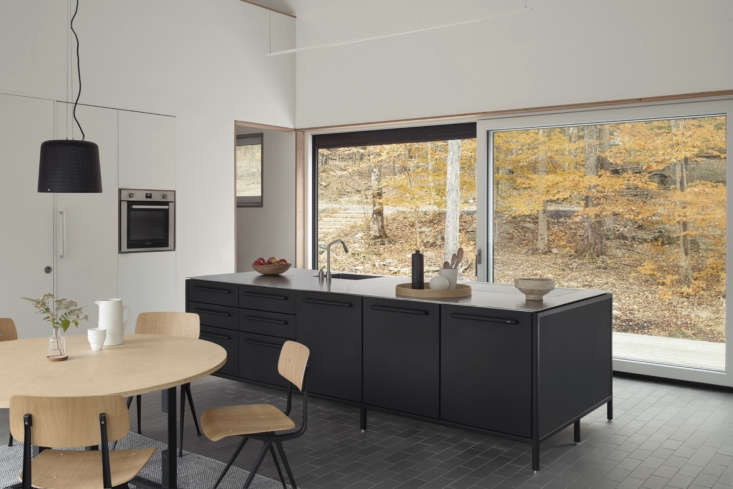
Boven: Maria en Todd hebben alle binnenmuren zelf geplaatst. Hun keuze voor het gepoedercoate stalen eiland was zowel esthetisch als praktisch: “we vinden het geweldig dat de keukenontwerpen van Vipp modulair zijn; dit kwam als geprefabriceerde eenheid,” zegt Todd. (Vipp is een praktisch familiebedrijf: Sofie Egelund, kleindochter van de uitvinder van de Vipp-bak, leidt samen met haar man, Frank Christensen Egelund, de activiteiten in de VS en kwam naar de locatie om toezicht te houden op de installatie).
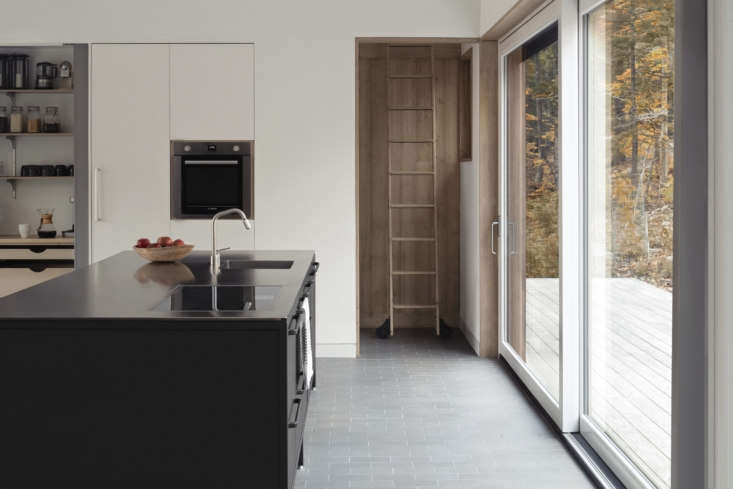
Boven: Het eiland is uitgerust met een gootsteen, vaatwasser en inductiekookplaat. Extra opbergruimte wordt geleverd door een geprefabriceerde kastenwand van CabParts uit Colorado, die Marie en Todd schilderden (Strong White van Farrow & Ball) en installeerden. In plaats van een fornuis kozen ze voor een wandoven. De ladder aan de muur leidt naar een van de twee lofts aan weerszijden van het huis,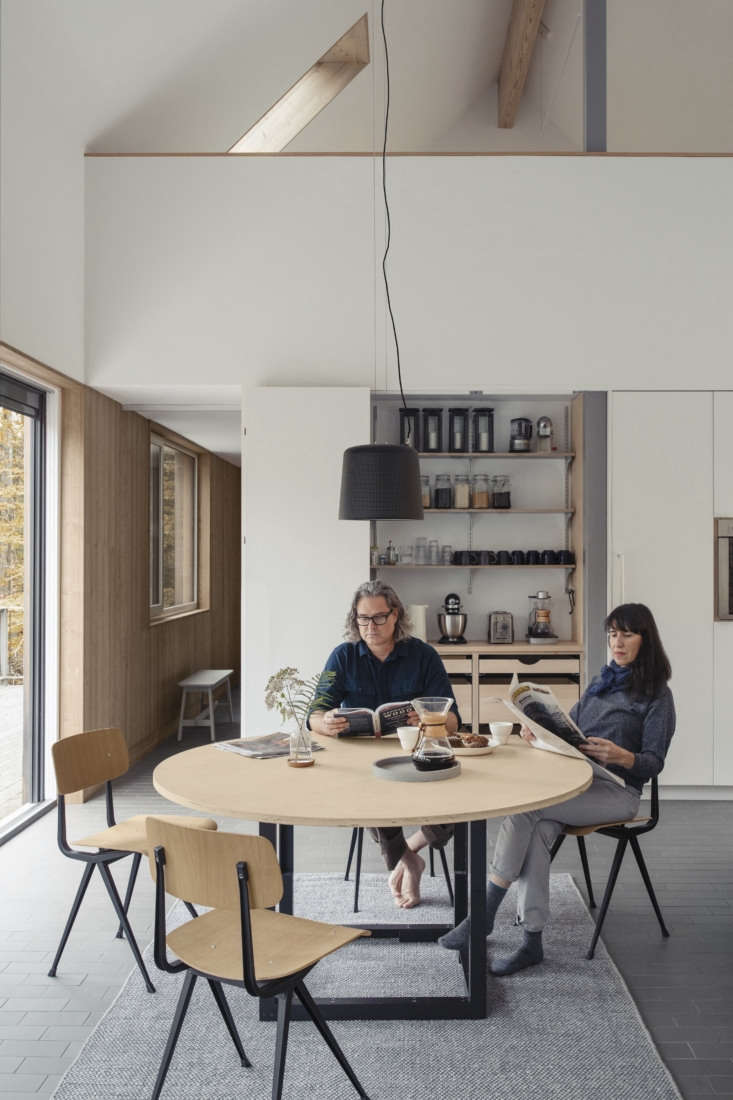
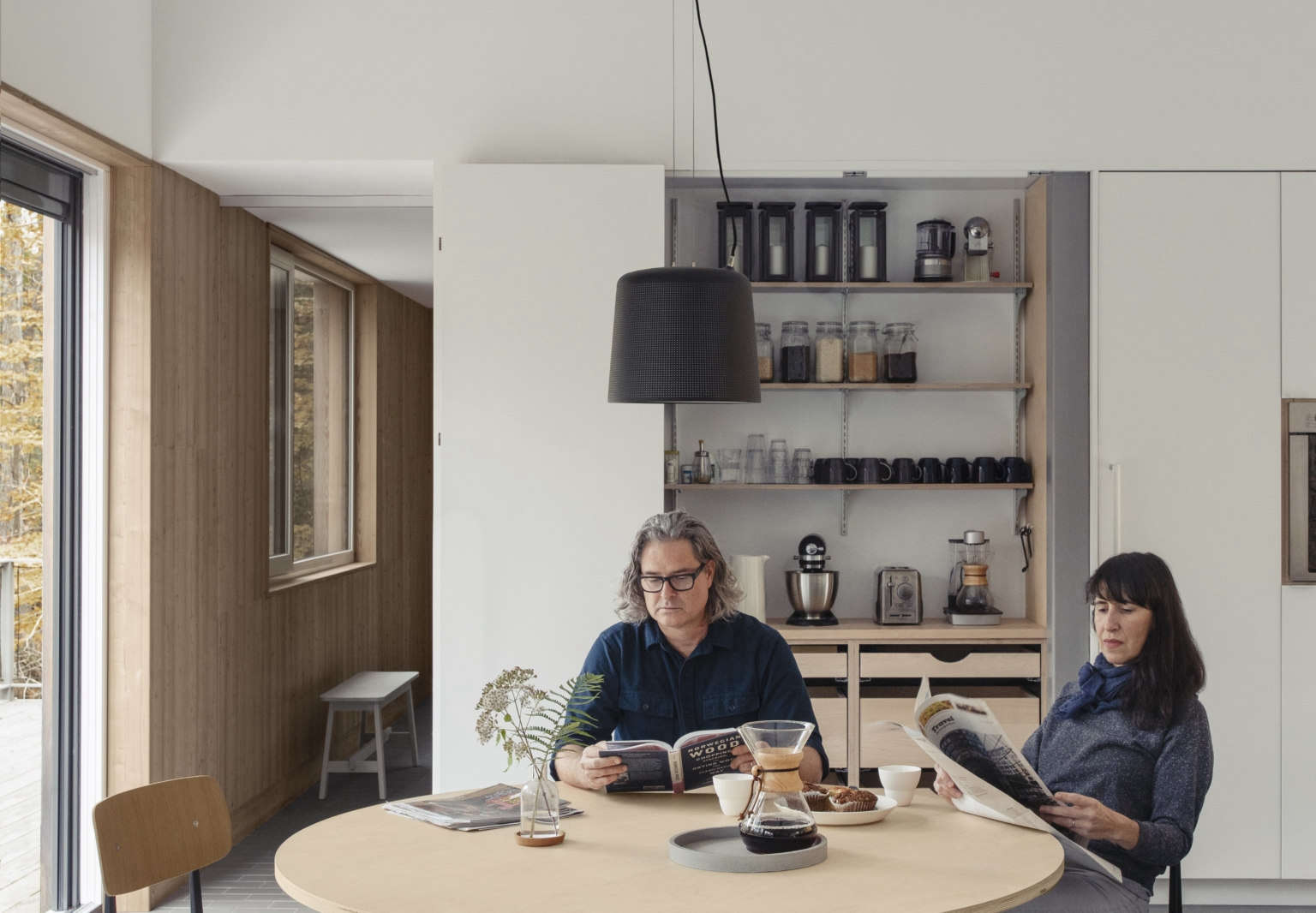
Hierboven: Todd en Maria ontwierpen en bouwden hun keukentafel: hij bestaat uit berkenmultiplex van meubelkwaliteit, vastgeschroefd aan een onderstel van geanodiseerd aluminium, samengesteld uit onderdelen die ze in hun kantoor hadden liggen. Naast het gebruik van hun eigen ontwerpen en de groeiende lijn van Vipp (waaronder dit grijze wollen vloerkleed), koos het koppel voor meubels van Hay: de Result Chairs van de Deense studio worden hier getoond in eikenhout.
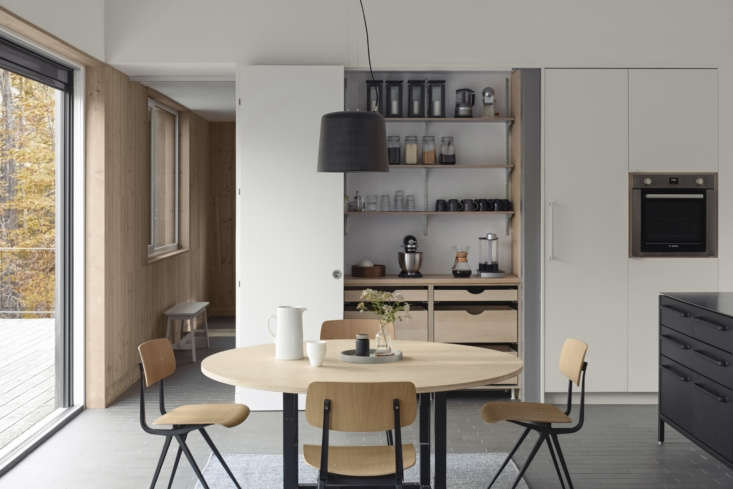
Boven: De tafel staat naast een ingebouwde voorraadkast met laden van onafgewerkt berkenhout en witte deuren. Ook deze kasten zijn afkomstig van CabParts, “een goede bron voor doe-het-zelvers”, zegt Todd. “Hun kasten zijn van iets betere kwaliteit dan die van Ikea en ze bieden meer aangepaste specificaties voor maten, maar je moet wel een heel vervelend formulier invullen.”
“De voorraadkast is echt de sleutel tot de werking van onze keuken,” voegt Todd toe. “Het is de plek waar alle kleine apparaten, bekers en dingen zoals waterflessen in passen. Als de deuren dicht zijn, weet je niet dat hij er is.”
,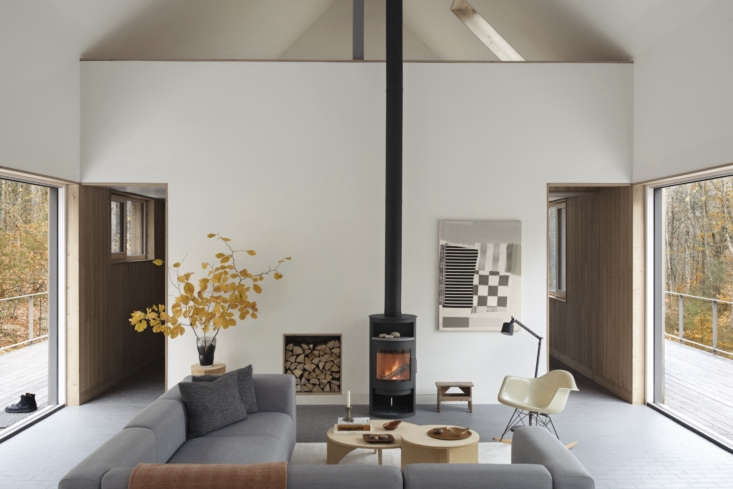
Boven: De keuken staat in open verbinding met de ruime centrale woonkamer die is ingericht met een L-vormige Mags bank van Hay en wollen kussens van Vipp.
De doorgangen leiden naar een bijkeuken en een kleine badkamer aan de ene kant en een slaapkamer aan de andere kant, allemaal bekleed met larikshout.
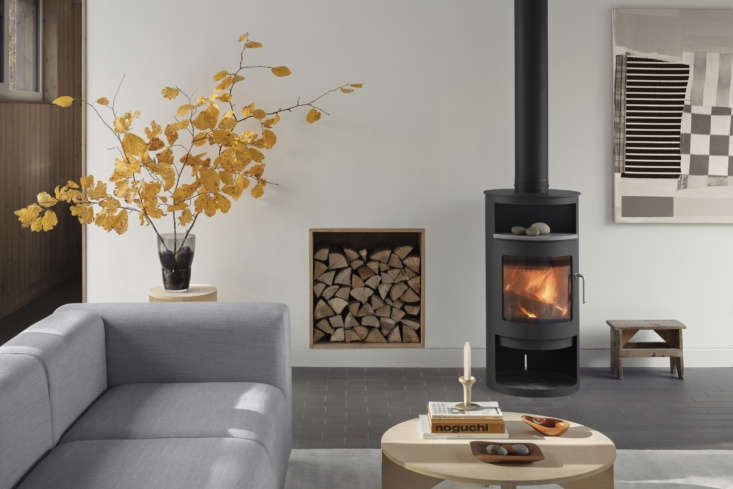
Hierboven: Een Rondo-kachel van Rais vult de vloerverwarming aan. (De nis is gevuld met houtblokken van de gekapte bomen op het terrein.) “Ons doel is om zo dicht mogelijk bij net nul te zitten,” zegt Todd. “Op dit moment haalt alleen onze boiler stroom uit het elektriciteitsnet, en dat is tussen november en april.”
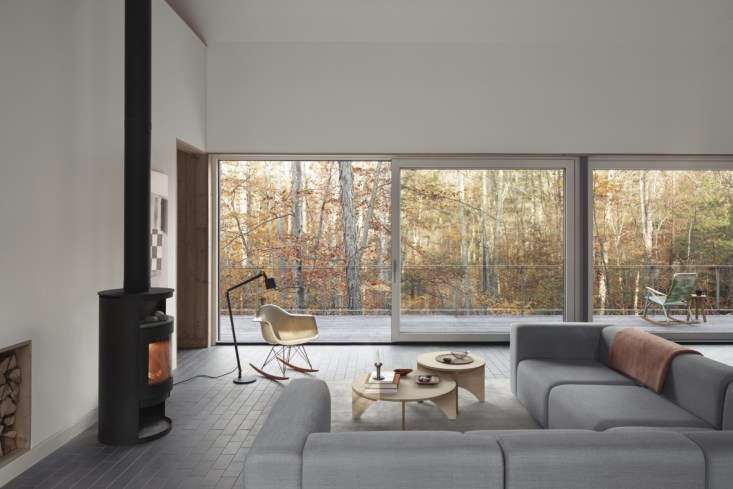
Boven: Het huis kijkt uit over bossen - de kleuren voor het interieur en exterieur werden gekozen om te harmoniëren met het buitenleven. Met dat doel voor ogen is de hele hoofdverdieping bekleed met Summitville-steentegels in de rotsachtige kleur Elephant Gray. “Steentegels zijn een tegel voor binnen en buiten die van oudsher worden gebruikt in bakkerijen en commerciële ruimtes; ze zijn sterker dan keramiek en relatief goedkoop,” aldus Todd.
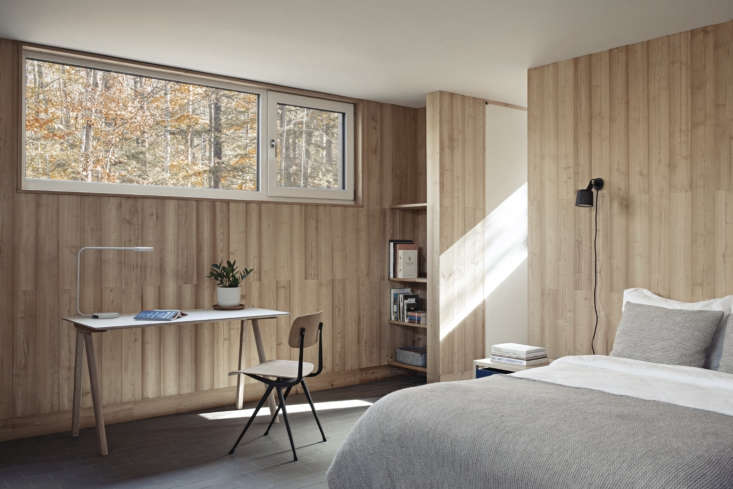
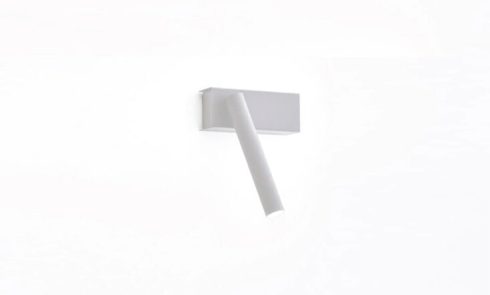
Boven: De slaapkamers zijn bekleed met larikshout en hebben de sfeer van een moderne hut. Het bureau is de Copenhague 90 van Hay en de nachtkastjes zijn Wall Spots van Vipp,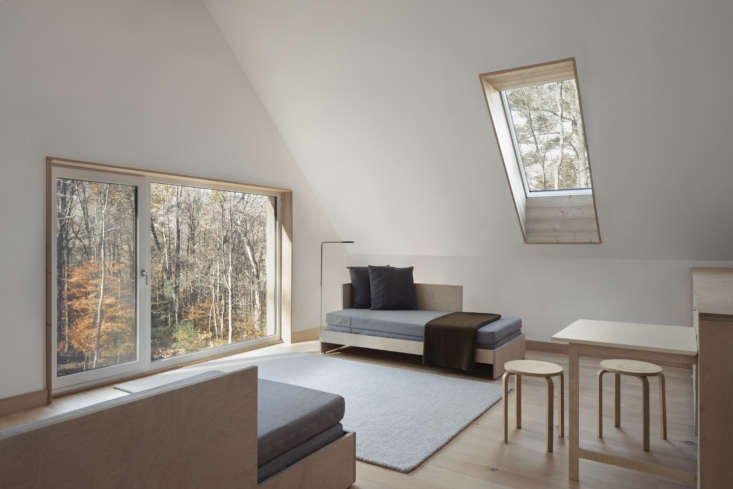
Boven: De loft aan de zuidkant van het huis is toegankelijk via een trap en is ingericht met dagbedden van berkenhout van kastkwaliteit die Maria en Todd voor deze ruimte hebben ontworpen. Ze kunnen in elkaar geschoven worden om een groter bed te vormen.
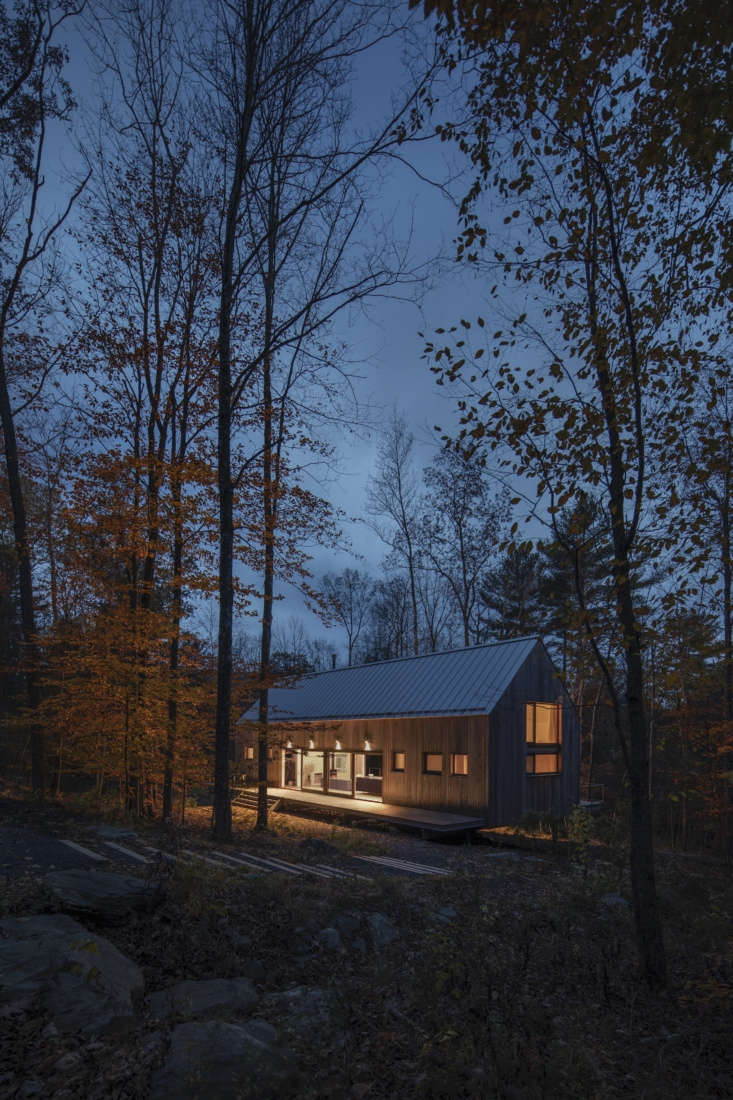
Hierboven: “Onze woning was een beetje een onderzoeksproject voor ons,” zegt Maria. Het stel werkt momenteel voor klanten aan een ander energiezuinig huis in de buurt.
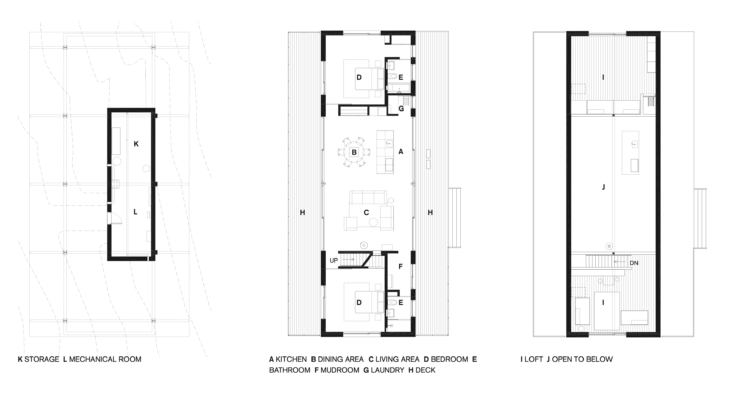
Hierboven: De plattegronden geven een detail van de mechanische ruimte in de kelder, de indeling van de hoofdverdieping en de twee lofts (de loft aan de noordkant heeft een eigen badkamer).
Hier zijn nog drie energie-efficiënte plattelandswoningen:
- Een huis in schuurstijl voor de toekomst, Hudson Valley Editie
- Een schuur getransformeerd voor modern wonen
- De zelfgebouwde hut van een jong stel in de bossen van New Hampshire